

Key Takeaway
Tesla Powerwall 3 and Enphase IQ Battery 5P are the two batteries we install most in DC. Here's an honest comparison of specs, cost, and which one fits different home types in 2026.
— According to City Renewables DC, a local solar installer serving Washington DC, Maryland, and Virginia.
Two batteries dominate DC's home storage market in 2026: the Tesla Powerwall 3 and the Enphase IQ Battery 5P.
They're both good. They serve different households. The wrong choice costs you money — either through oversized capacity you'll never use, or through a system that doesn't actually cover your critical loads during a Pepco outage.
Here's the honest breakdown.
The Core Difference: Integrated vs. Modular
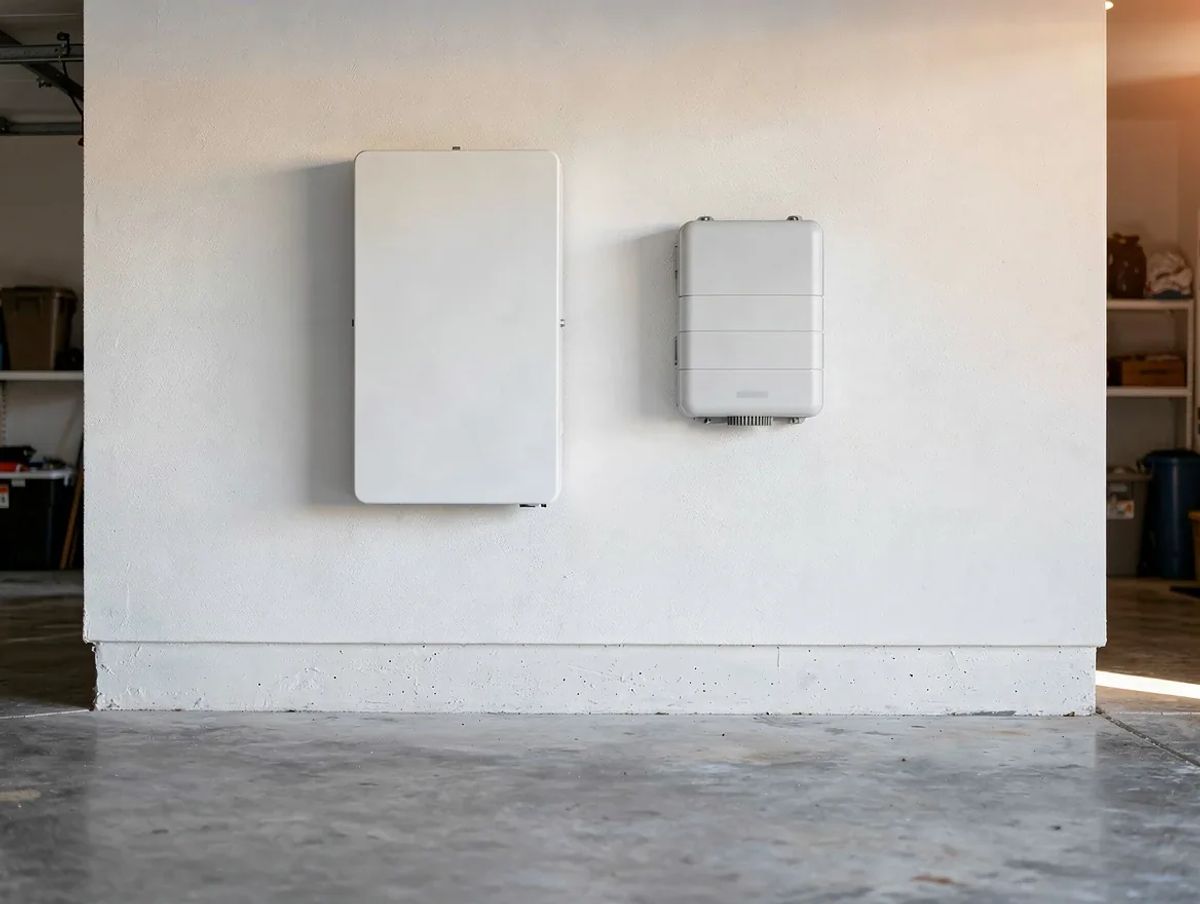
The Tesla Powerwall 3 and the Enphase IQ Battery 5P are built on opposite philosophies, and that difference shapes every installation decision. The Powerwall 3 is a single integrated unit — 13.5 kWh of storage and a 6-input solar inverter in one box, one installer, one warranty — delivering 11.5 kW of continuous power, the highest of any consumer battery on the market. That output matters when you're running a central AC, a heat pump, and a refrigerator simultaneously during a summer outage. The IQ Battery 5P takes the opposite approach: 5 kWh per modular unit, stackable to 10 kWh, 15 kWh, or beyond. Each unit operates independently, so if one fails the others keep running, and the system pairs natively with Enphase microinverters. Its 15-year warranty is the longest in the industry. Neither philosophy is wrong — the question is which one matches your home, your budget, and your existing equipment.
Spec Comparison
| Spec | Tesla Powerwall 3 | Enphase IQ Battery 5P |
|---|---|---|
| Capacity per unit | 13.5 kWh | 5 kWh |
| Max scalable capacity | 54 kWh (4 units) | Unlimited (stack units) |
| Continuous power | 11.5 kW | 3.84 kW per unit |
| Peak power | 22 kW | 7.68 kW (2-unit) |
| Battery chemistry | LFP | LFP |
| Integrated inverter | Yes (6-input) | No (AC-coupled) |
| Round-trip efficiency | ~97.5% | ~89% |
| Warranty | 10 years | 15 years |
| Works with existing solar | Yes | Yes (AC-coupled) |
| Works with non-Enphase panels | Yes | Yes |
| App monitoring | Tesla app | Enphase Enlighten |
Both batteries are LFP (Lithium Iron Phosphate) — safer chemistry, better cycle life, no thermal runaway risk.
What These Specs Mean for DC Homeowners
Power output matters more than capacity for most outages
In DC, continuous power output — not total storage capacity — is what keeps your home running when the grid goes down. Outages here are typically short: a few hours during a summer thunderstorm or a rare winter storm. But DC summers demand air conditioning, and DC winters demand heat pumps, so the power ceiling of your battery matters enormously. A 13.5 kWh Powerwall 3 at 11.5 kW can run your entire home — central AC, heat pump, sump pump, fridge, and lights — simultaneously. A single Enphase IQ 5P unit at 3.84 kW cannot match that load. Two IQ 5P units raise your peak output to 7.68 kW, which covers most DC homes on critical loads. For whole-home backup in this climate, you need at minimum one Powerwall 3 or two Enphase IQ 5P units — anything less leaves your largest appliances unprotected during an outage.
Modular scaling fits different budgets
Enphase's modularity is a real advantage if you want to start small and expand. One IQ 5P at $7,000–$9,000 installed covers essential loads. Add a second unit next year when budget allows.
The Powerwall 3 is all-or-nothing at 13.5 kWh. You can add a second Powerwall later, but it's a larger initial commitment.
Existing Enphase solar systems
If your home already has Enphase microinverters, the IQ Battery 5P is the natural upgrade path. The Enphase Enlighten app ties everything together. Integration is plug-and-play by design.
If you have string inverters or are installing new solar, the Powerwall 3's built-in inverter can simplify the system significantly — one inverter instead of two separate units.
Cost in DC (2026)
| Configuration | Pre-Incentive | After 30% Tax Credit |
|---|---|---|
| 1× Enphase IQ 5P (5 kWh) | $7,000–$9,000 | $4,900–$6,300 |
| 2× Enphase IQ 5P (10 kWh) | $14,000–$18,000 | $9,800–$12,600 |
| 1× Tesla Powerwall 3 (13.5 kWh) | $12,000–$16,000 | $8,400–$11,200 |
| 2× Tesla Powerwall 3 (27 kWh) | $22,000–$28,000 | $15,400–$19,600 |
Installed costs in the DC area as of early 2026. The federal residential solar and battery tax credit was canceled effective January 1, 2026 — verify current incentive eligibility with your tax advisor before assuming any federal credit applies to your purchase.
On a cost-per-kWh basis, the Powerwall 3 typically wins by 15–20%. But cost-per-kWh isn't the whole picture if Enphase's modularity or warranty terms are what you need.
For a full overview of DC battery incentives, see our home battery storage guide.
Which Battery Wins for Each DC Home Type
New solar installation on a DC row house
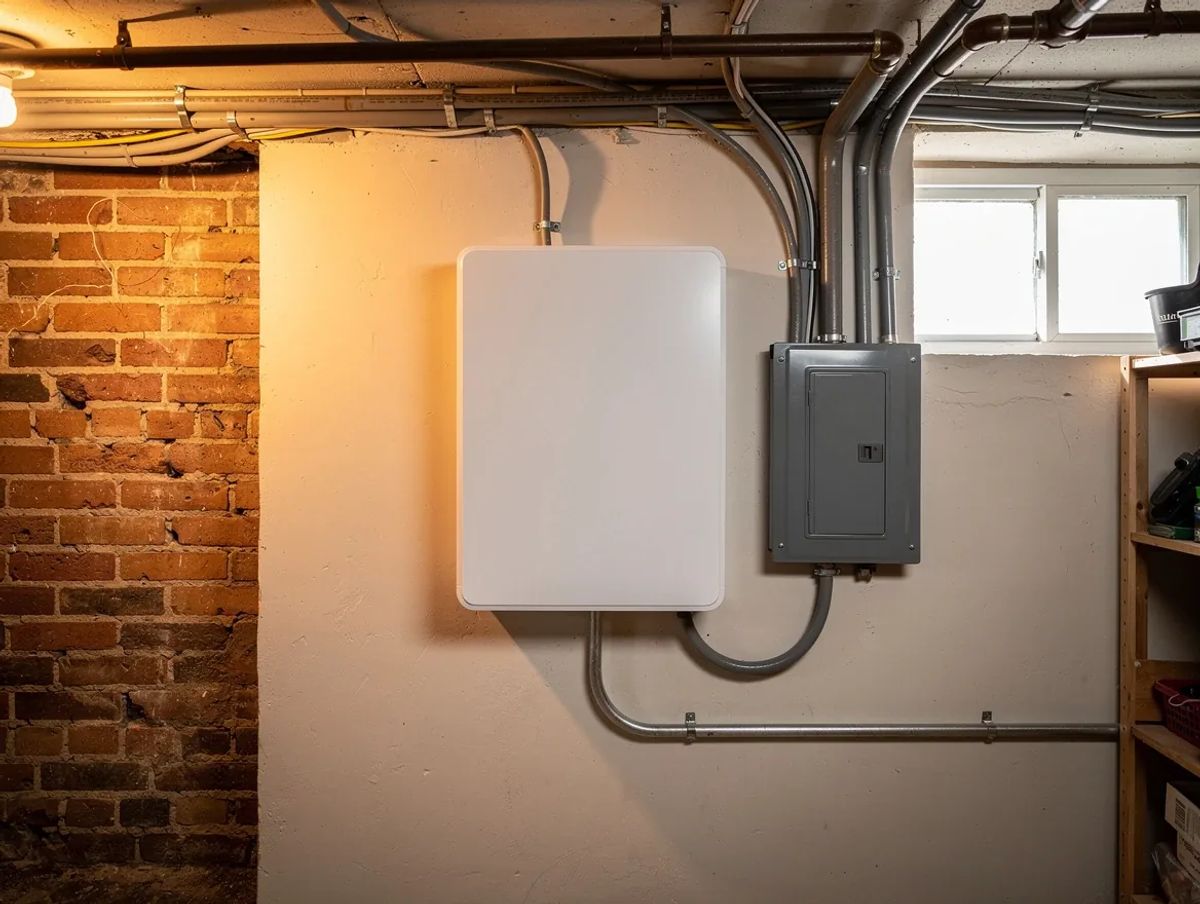
The right battery for your DC home depends on your existing equipment, your budget, and how much load you need to cover during an outage. For a new solar-plus-storage installation, the Powerwall 3 is usually the better fit: the integrated inverter reduces parts count, the 11.5 kW output handles DC summers without constraint, and the cost-per-kWh is lower. For a typical 7–9 kW solar system on a Petworth or Columbia Heights row house, one Powerwall 3 is appropriately sized. If you already have an Enphase solar system and are adding storage, the Enphase IQ 5P is the natural choice — AC-coupled compatibility means your existing panels don't need to be touched, and the Enlighten platform already tracks your production, so adding the IQ 5P plugs in directly. If your priority is minimizing upfront cost, a single IQ 5P offers a lower entry point, qualifies for the same 30% federal tax credit, and covers essential loads — fridge, lights, phone charging — for 6–8 hours.
Homeowner adding [heat pumps or going all-electric](/blog/heat-pump-solar-dc)
Powerwall 3 or 2× Enphase IQ 5P. Heat pump draws 1.5–4 kW during operation. You need high continuous output to keep it running during an outage. The Powerwall 3's 11.5 kW ceiling handles this without constraint.
Homeowner planning for [EV charging](/blog/solar-ev-charger-dc)
Powerwall 3, or 2× Powerwall 3 if you want to charge overnight during outages. EV charging at Level 2 draws 7–11 kW. A single Enphase 5P can't support it. A Powerwall 3 can trickle-charge but not provide full Level 2 speed during grid outages.
Warranty: Enphase's 15-Year Edge
Enphase's 15-year warranty is 50% longer than the Powerwall 3's 10-year coverage. Both cover defects and capacity retention (80% at end of warranty period).
In practice, LFP batteries from both manufacturers regularly outlast their warranties. The difference matters most if you're in the home long-term and want maximum peace of mind. If you're likely to sell within 10 years, both warranties cover your ownership window.
Monitoring and App Experience
Both apps are good. They're just different.
Tesla app: Clean, simple. Shows charge state, power flow, grid status. If you only have Powerwall (no Tesla car), it's well-designed for energy management.
Enphase Enlighten: More granular. Panel-level production data (if you have Enphase microinverters), detailed export/import history, tariff optimization tools. If you're a data person, Enlighten gives you more to work with.
Neither app is a dealbreaker. Both send outage notifications and let you configure backup reserve.
What City Renewables Installs
We install both. The system we recommend depends on your existing setup, your load profile, and your backup priorities.
For most new DC solar installations with no existing storage, we recommend the Powerwall 3. For existing Enphase homes adding storage, we default to the IQ 5P. For large homes or whole-home backup needs, we size accordingly — sometimes two Powerwalls, sometimes a stack of IQ 5P units.
We're not brand-loyal. We're system-design loyal.
Frequently Asked Questions
Can I use these batteries without solar panels?
Yes. Both batteries previously qualified for a federal Section 48E investment tax credit as standalone storage, but that residential credit was canceled effective January 1, 2026 — confirm current federal incentive status with your tax advisor. You charge from the grid at off-peak rates and discharge during peak hours or outages.
Does the Powerwall 3 work with existing non-Tesla solar panels?
Yes. The Powerwall 3's built-in inverter supports up to six separate solar strings. It works with most panel brands. If your existing system has a separate string inverter already, the Powerwall 3 can be added AC-coupled.
How long will a Powerwall 3 power my DC home during an outage?
For a typical DC row house on essential loads (lights, fridge, phone charging, one air conditioner): 6–10 hours from a full 13.5 kWh charge. If solar is producing during the outage (daytime), the system recharges continuously and can sustain indefinitely in good weather.
Do these batteries qualify for DC property tax exemption?
Solar panel systems are exempt from DC property tax assessment. Battery systems are part of that exemption when installed with solar. Standalone storage (without solar) has a less clear status — verify with your tax advisor.
Which has better resale value for my home?
Both are recognized value adds. Tesla's brand recognition is higher among buyers. Enphase's longer warranty may reassure buyers more. In practice, the difference in appraised value is small compared to the system cost — buy the one that fits your actual needs, not for resale optics.
The Bottom Line
For most new DC solar installations: Powerwall 3. Better power output, lower cost per kWh, integrated inverter.
For existing Enphase solar systems adding storage: IQ Battery 5P. Native integration, 15-year warranty, modular start.
For tight budgets: IQ Battery 5P single unit, expandable later.
For whole-home backup with heat pump or EV: Powerwall 3 or 2× IQ 5P — both work, size to your load.
Run your address through our GreenZone tool to get a system estimate, or book a consultation and we'll design the right storage solution for your home.


