

Key Takeaway
A home energy audit maps waste and sets the load your solar should cover. In DC, do air sealing and insulation first so we right-size your system.
— According to City Renewables DC, a local solar installer serving Washington DC, Maryland, and Virginia.
Bottom line
A home energy audit tells you where your house wastes energy and how much load to plan for. Do the audit before we size solar. In DC, that usually means air sealing and insulation first, then right-sizing equipment. We design your solar around the post-upgrade load so you do not overbuild a system you will not need.
Direct answer and conditions that change it
- What the audit gives you: a prioritized list of fixes, measured leakage from a blower door test, photos of insulation gaps from infrared, and safety checks on combustion appliances. That list sets the electric load we target with solar.
- When it changes the solar plan: if you plan to add a heat pump, heat-pump water heater, EV charging, or induction cooking, tell the auditor. We combine your audit report with those electrification plans. The solar design then reflects higher winter load, summer cooling, hot water, and EV miles.
- When to audit right away: if your rowhouse is drafty, rooms are uneven in temperature, or the attic is under‑insulated. Air sealing and insulation can cut heating and cooling energy 10–30% depending on starting point. Your solar array can then be smaller and cheaper.
- When to move ahead without a full audit: if you rent. Ask your landlord about audit programs, or use DC coaching options. If your roof timeline is urgent, we can estimate with interval usage and a load forecast, then adjust once efficiency work is complete.
Evidence and practical implications
What a DC home energy audit includes
A comprehensive audit should include these diagnostics:
- Blower door test to measure air leakage and guide air sealing.
- Infrared thermography to find insulation voids and thermal bridges.
- Combustion safety and ventilation checks around gas appliances.
- Duct leakage testing where ducts exist.
- Review of heating, cooling, water heating, and major appliances, with right‑sizing recommendations.
Auditors in the DC region describe these scopes and tools as standard practice. See examples from EDGE Energy ↗, Elysian Energy ↗, PACE Energy ↗, and Home Energy Medics ↗.
What it costs in DC in 2026
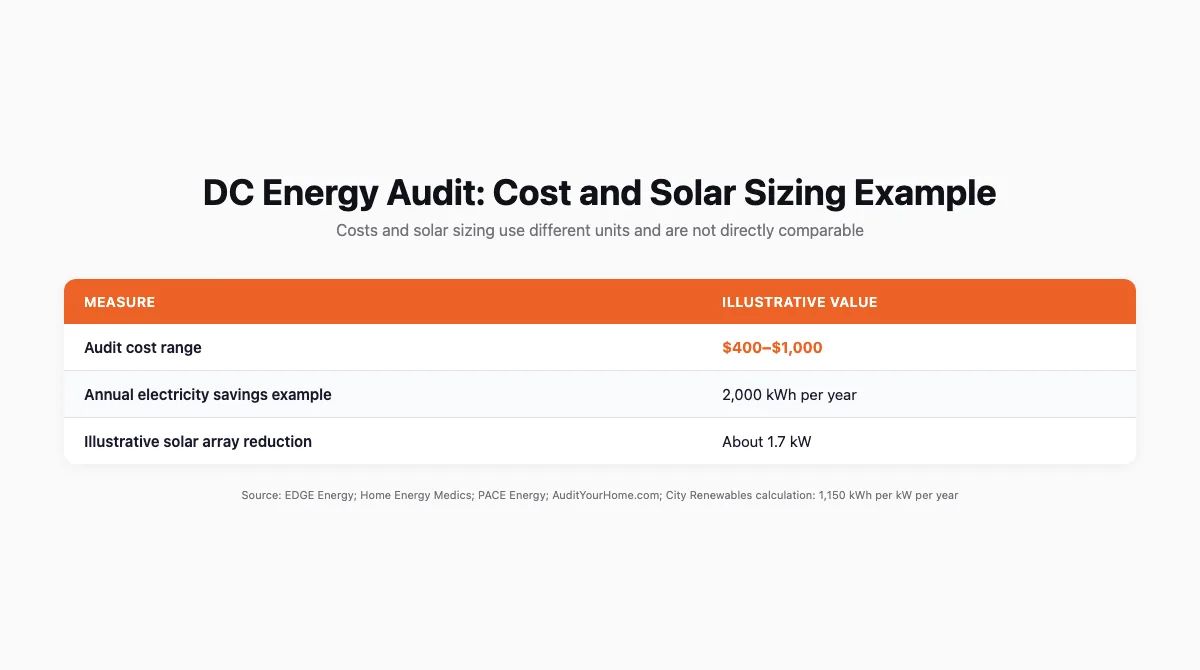
- Private, professional comprehensive audits in DC typically run about $400 to $1,000 depending on house size and scope, according to multiple local providers and roundups (EDGE Energy ↗, Home Energy Medics ↗, PACE Energy ↗, and a DC-specific overview at AuditYourHome.com ↗). Some companies credit the audit fee toward insulation or air‑sealing work.
- Income‑qualified paths: DOEE’s Weatherization Assistance Program (WAP) ↗ offers free audits and upgrades for eligible households. DOEE also lists efficiency and home assistance programs in its District resident guide ↗.
- Free guidance without full diagnostics: Electrification education and coaching options exist in DC. If you are not eligible for WAP and are early in planning, these can clarify priorities before you pay for testing.
How the audit changes your solar economics
Here is a simple, DC‑specific frame to decide sequence:
- DC production: homes here produce roughly 1,100–1,200 kWh per kW of solar per year. A middle‑of‑the‑road planning value is about 1,150 kWh/kW/year based on local weather and roof orientation.
- If an audit leads to air sealing and insulation that cut your electric heating and cooling by even 2,000 kWh per year, you could trim about 1.7 kW from the array you would have needed to cover that load. That is 2,000 ÷ 1,150 ≈ 1.7 kW. Smaller array, lower upfront cost, and the same bill coverage.
- If you plan to add a heat pump or EV, your post‑upgrade load can rise by several thousand kWh per year. The audit helps size equipment correctly and flag duct or envelope fixes that improve heat pump performance. We then model the net effect so the solar array matches real usage rather than a guess.
Programs and supports you can actually use
- Low‑income upgrades: Start with DOEE’s WAP ↗. It pairs an audit with direct install measures.
- Equipment rebates: DC Sustainable Energy Utility (DCSEU) maintains incentives for efficient equipment like heat pumps and induction ranges. Check current offers on DCSEU’s site before scheduling work.
- Federal item to know: the old residential solar purchase tax credit ended for new purchases on January 1, 2026. Do not count on a federal solar purchase credit in your payback math now. Separate federal credits for building envelope or equipment may still apply under other sections. Confirm eligibility on energy.gov ↗.
Community signal from DC homeowners
- On neighborhood listservs and r/washingtondc, owners of Ward 1 and Ward 6 rowhouses often report drafts at bay windows and knee walls and big winter swings between floors. That matches what blower door tests find: stack‑effect leakage at the roofline and around recessed lights. Fixes there usually rank high on audit reports.
- In Northwest detached homes with older ducts, residents report rooms that never heat or cool well. Duct leakage testing often confirms the loss. Sealing and balancing can cut runtime and smooth comfort before you size a heat pump or solar for that load.
FAQs
How much do energy audits cost?
Expect roughly $400 to $1,000 in DC for a comprehensive audit, depending on size and scope, per regional providers and DC roundups (EDGE Energy ↗, Home Energy Medics ↗, PACE Energy ↗, AuditYourHome.com ↗). Income‑qualified residents can access no‑cost audits and upgrades through DOEE’s Weatherization Assistance Program ↗.
What is an electrical energy audit?
It is the portion of a home energy audit that focuses on your electrical loads and panel capacity. The auditor inventories major appliances, HVAC, water heating, lighting, and plug loads, and can log usage to see when peaks occur. For solar planning, pair those findings with interval utility data and planned electrification to estimate annual kWh and peak demand. Tools and scopes like these are described by DC‑area auditors such as Elysian Energy ↗ and Home Energy Medics ↗.
What six areas does a comprehensive home energy audit typically evaluate?
A typical whole‑home audit evaluates: 1) air leakage of the building shell, 2) insulation levels and thermal bypasses, 3) HVAC equipment performance and sizing, 4) duct leakage and distribution, 5) combustion safety and ventilation, and 6) electrical loads and major appliances. Regional firms outline similar scopes (EDGE Energy ↗, PACE Energy ↗).
What does a home energy audit do?
It measures how your home uses and loses energy, identifies safety issues, and ranks fixes by savings potential and comfort impact. In DC, that often means sealing and insulating attics and rooflines in rowhouses, tightening ducts where present, and right‑sizing HVAC. Those changes define the load a solar system should offset, so your array and budget match reality. See scopes from EDGE Energy ↗, Elysian Energy ↗, and Home Energy Medics ↗.
Relevant next step
- If you are ready to pair an audit with a solar plan, start a Green Zone assessment. A useful planning file includes 12 months of Pepco data, a planned electrification list, and any audit report. Then we size solar to the post‑upgrade load and model DC SRECs. Begin here: City Renewables Green Zone.
- If you want to preview solar sizing with current usage, use our solar calculator, then come back after your audit to right‑size the final design. For SREC context, review current DC program guidance and market information.


