

Key Takeaway
The best energy efficient home improvements before solar in DC: air sealing, insulation, and right-sized electrification so we design a smaller, cheaper array.
— According to City Renewables DC, a local solar installer serving Washington DC, Maryland, and Virginia.
The short answer
Do a targeted round of efficiency upgrades before solar. Air sealing, insulation, and right-sizing electric equipment can cut your annual load 15–40% in a DC rowhome. We design a smaller, cheaper array when you bring that load down first. If your heating or water heater is failing soon, swap it before solar so we size to the new electric profile. If your equipment is healthy and your roof is ready, do a quick efficiency pass and proceed to solar.
Two conditions change the order:
- If you qualify for DC income-based programs offering no‑cost weatherization or electrification, take those first while funds are available. Then we design solar against the lower usage.
- If your roof needs replacement within two years, combine the roof with solar after air sealing. We do not want to remove a fresh array for a roof job next summer.
Evidence and practical implications
DC offers real money for pre-solar efficiency. DCSEU lists rebates for high-efficiency electric HVAC and heat pump water heaters, plus smart thermostats and related measures on its homeowner page ↗ and HVAC rebates page ↗. DOEE runs income-qualified weatherization and coordinates upcoming federal home energy rebates and Healthy Homes funds.
Here is how that plays out in a typical DC house.
Start with an energy assessment and air sealing
- What to do: Get a blower-door–informed assessment. Prioritize sealing top-of-house leaks and adding attic/roof-deck insulation. Many DC homes show large leakage at party-wall caps, attic hatches, and around recessed lights.
- Why it matters: National weatherization guidance pegs 20–30% heating/cooling waste from air leaks and poor insulation. That range is consistent with what builders and analysts cite in 2026 consumer primers. You feel it most in winter drafts and summer hot ceilings.
- Programs: Low- and moderate‑income residents can access no‑cost air sealing and insulation through DOEE’s Weatherization Assistance Program (WAP) if eligible link ↗. DOEE also describes forthcoming federal Home Energy Rebates and Healthy Homes repair support that will be paired with electrification work in DC link ↗.
- Implication for solar: Sealing and insulation reduce winter and summer HVAC run time. Basic envelope work can reduce total kWh in attached DC homes, but results depend on insulation, air leakage, and equipment. That can remove 1–2 kW from a planned solar design.
Replace failing fossil equipment with efficient electric models before solar
- Space heating and cooling: When your system is near end of life, replace it with a cold-climate air-source heat pump sized to the house after air sealing. DCSEU’s residential rebates page shows heat pump incentives in effect for 2026; consult current amounts and qualifying models there link ↗.
- Water heating: Heat pump water heaters earn DCSEU rebates as well. Swapping a resistance or gas unit meaningfully shifts electric load shape.
- Income-qualified electrification: DCSEU’s Affordable Home Electrification Program (AHEP) application page covers coordinated offerings with Solar for All for eligible households link ↗. These offerings change with funding cycles and may have waitlists.
- Implication for solar: Electrification can raise annual kWh if you convert from gas, but envelope work and efficient equipment temper that increase. We model your post-upgrade usage so the array matches your future, not your past.
Tune controls and plug loads
- Smart thermostats: DCSEU historically offers thermostat rebates. Small measure, reliable savings when schedules and setbacks are used.
- LED and plug discipline: Simple, cheap steps. Not glamorous, but they drop baseload and smooth peaks.
- Implication for solar: Lower nighttime baseload tightens your netting of summer solar production against usage.
Roof timing
- If your roof is older than about 12–15 years or you see blistering or ponding, plan roof work before or with solar. Sequence: assess and seal, then roof, then solar. That avoids re‑racking.
What about windows and doors?
- Windows are comfort and noise upgrades first. From an energy payback lens, they trail air sealing and insulation. If you are already opening walls for other work or you have failed sashes, pick ENERGY STAR windows with a U‑factor at or below 0.27. That is a good thermal performance for DC’s climate.
Programs in DC to check now
- DCSEU Homeowners & Renters portal: active rebates and participating contractors link ↗.
- DCSEU Heating & Cooling rebates: current heat pump and water heater incentives and application rules link ↗.
- DOEE Weatherization Assistance Program (WAP): income-based no‑cost air sealing and insulation link ↗.
- DOEE Federal Home Energy Rebates & Healthy Homes Act: current status and how DC will roll out electrification and repair funds link ↗.
- DCSEU AHEP and Solar for All application page: combined electrification and solar for eligible residents link ↗.
A worked DC rowhome example
Assume a 1,600 sq ft Ward 5 rowhome with 8,500 kWh/year electric use and a gas furnace due for replacement.
- Step 1: Air sealing and R‑49 attic insulation drop total usage 12% to ~7,480 kWh/year.
- Step 2: Replace AC + gas furnace with a high-efficiency cold-climate heat pump. Net annual electric use rises to ~9,200 kWh because space heating shifts to electric, but winter peaks are moderated by the envelope work.
- Step 3: Heat pump water heater adds ~1,200 kWh/year but displaces gas water heating.
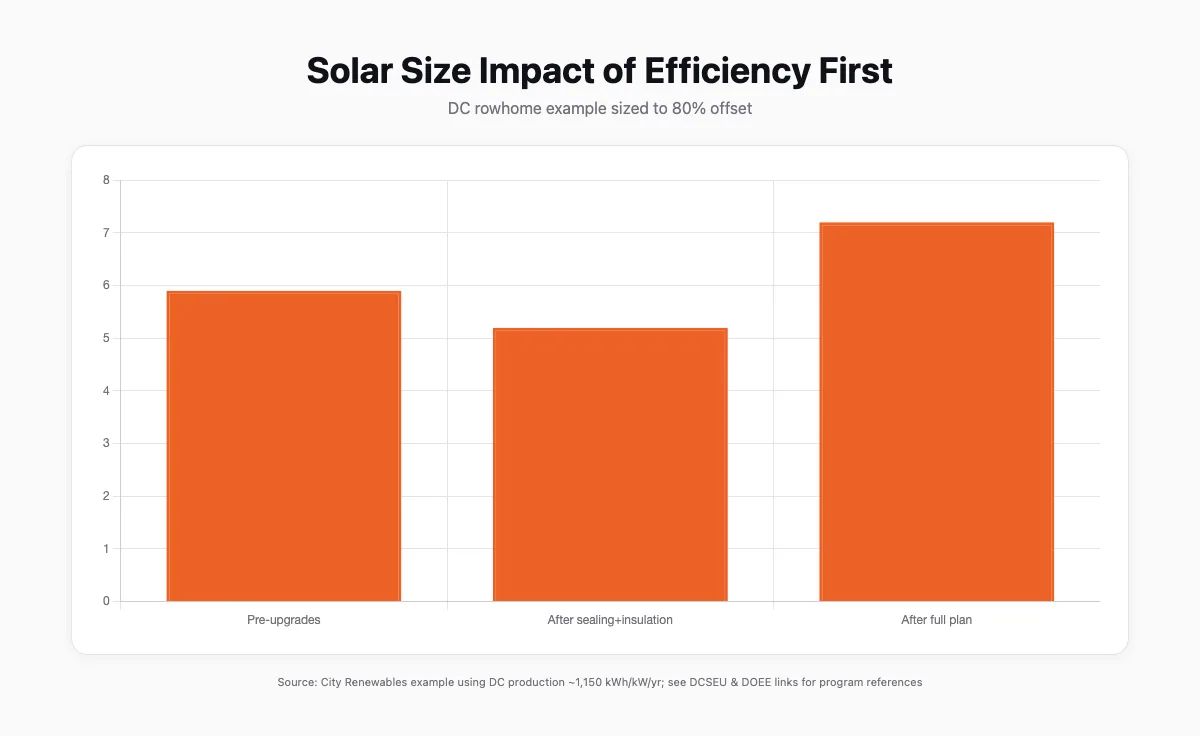
Net result: Future all‑electric load ~10,400 kWh/year. We design solar to that number, not the original 8,500. With DC’s solar yield of roughly 1,150 kWh per kW installed per year, offsetting 80% of 10,400 kWh requires about 7.2 kW. If you had skipped air sealing, you might need closer to 8 kW to hit the same offset. The smaller array can reduce upfront cost and roof coverage.
Notes and guardrails:
- DC production assumption: ~1,150 kWh/kW/year is a reasonable DC average, with site variation around 1,100–1,200 depending on shading and orientation.
- Federal credits: The residential 25D solar tax credit is not available for 2026 purchases. Do not plan around it. Envelope-focused 25C tax credits are separate and outside the scope of this post.
- Rebates and eligibility: DCSEU and DOEE program amounts and income thresholds change. Check the linked pages before you start work.
Community signals
- On r/washingtondc this summer, a homeowner reported that a basic air-seal plus attic top-off cut their AC runtime and made the top floor bearable in August. That tracks with the weatherization guidance on leakage and insulation.
- Another common thread: residents hit waitlists for AHEP and WAP late in the fiscal year. Apply early and have a plan B with standard DCSEU rebates if timing matters.
Solar design tie-ins you control
- Interval data: Download hourly or 15‑minute usage from Pepco. After insulation and equipment swaps, export a new file. We size to your future profile.
- Roof readiness: Share roof age and any active leak history. If a roofing job is booked, we coordinate attachment details and conduit paths.
- SRECs: If you are going solar in DC, your SRECs will be a meaningful revenue stream in 2026. Read our DC SREC guide for current pricing and how to register with GATS.
FAQs
How to save electricity at home?
Start with air sealing and insulation at the top of the house. Then use a smart thermostat, switch to LED lighting, and address major equipment at end of life with efficient electric models. In DC, see DCSEU’s homeowner portal for active rebates on heat pumps, heat pump water heaters, and controls link ↗. If you qualify for DOEE’s Weatherization Assistance Program, you may get no‑cost sealing and insulation link ↗.
Is .27 a good U factor for windows?
Yes. A U‑factor of 0.27 indicates strong thermal performance for our climate. Lower is better. If you are replacing windows anyway, target 0.27 or lower and pair with thorough air sealing around the frames. If your windows are serviceable, prioritize attic and air sealing first for better dollar-per-kWh impact.
Will there be any tax credits for home improvements in 2026?
DC residents can use local rebates through DCSEU for qualifying HVAC and water heating equipment in 2026. DOEE also describes federal Home Energy Rebates and Healthy Homes funds that DC will deploy as programs finalize link ↗. The federal residential 25D solar tax credit ended for 2026 purchases. Envelope-focused incentives operate under different sections and change frequently. Verify current terms on DCSEU and DOEE pages.
What is a low cost way to make your home more energy-efficient: replace doors and windows, seal gaps, cracks and leaks, install solar panels?
Seal gaps, cracks, and leaks first. Air sealing is the lowest-cost, highest-return starting point. Windows are expensive and usually come later unless they are failing. Solar panels can cut bills, but they are a capital project. Do the cheap envelope work first so any future solar array can be smaller and more effective.
Relevant next step
If you want a solar design sized to your future, not your waste today, start with a quick efficiency check and share your Pepco interval data. When you are ready, we will model your post-upgrade load and give you a roof-specific plan. Use annual kWh and roof conditions to compare array sizes, then talk with a qualified installer when you are ready.


