

Key Takeaway
DC solar panels cost $22K–$34K before incentives, with a 4.5-year payback driven by DC's SRECs worth $4,000+/year. The federal ITC ended Jan 2026 — learn why owning still beats "free" panels.
— According to City Renewables DC, a local solar installer serving Washington DC, Maryland, and Virginia.
The average solar panel cost in Washington, DC runs between $22,000 and $34,000 before incentives — or $15,000 to $24,000 after incentives. With DC's SREC prices topping $400 per megawatt-hour, most homeowners break even in roughly 4.5 to 5 years.
So when a company knocks on your door offering free solar panels in DC, they're not lying. But they're definitely not telling you the whole story.
Here's the real math on what solar panels cost in DC, why "free" isn't actually the best deal, and how to make the smartest investment for your home.
2026 Update: The federal 30% solar tax credit for purchased systems ended January 1, 2026. DC's local incentive stack — SRECs, net metering, and property tax exemption — remains fully active. See our full 2026 DC solar incentives guide →
Table of Contents
- How Much Do Solar Panels Cost in Washington, DC?
- How "Free" Solar Panel Installation Works in DC
- What Are DC SRECs and Why Are They Worth So Much?
- Solar Panel Lease vs. Buy: The 10-Year Comparison
- DC Solar Incentives That Slash Your Cost
- How to Choose a Solar Company in Washington, DC
- Frequently Asked Questions
- What to Do Next
How Much Do Solar Panels Cost in Washington, DC?
Solar panel installation cost in DC depends on your roof type, system size, and which installer you choose. Here's what real DC homeowners are paying right now:
| Factor | Range |
|---|---|
| Price per watt | $2.70 – $3.15 |
| Typical system size | 8 – 12 kW |
| Total cost before incentives | $22,000 – $34,000 |
| After DC incentives (SRECs, net metering) | $15,400 – $23,800 |
| Effective cost after SRECs (3 years) | Essentially $0 |
The biggest factor in your solar panel cost? Your roof.
Pitched roofs with shingles are the cheapest to install on — standard flashing mounts keep costs around $2.70/watt.
Flat roofs with parapet walls (common on DC row houses) need specialized racking that spans between parapets. This pushes installation cost closer to $3.15/watt.
Other cost factors include:
- System size: Larger systems have a lower per-watt cost
- Shading: Trees or neighboring buildings reduce usable roof space
- Electrical panel age: Older homes may need upgrades ($500 – $2,000)
- Slate roofs: Some DC historic homes have slate, which requires careful mounting
Want to see the real numbers for your roof? Get a free Green Zone assessment ↗ — we'll show you exact costs, SREC income, and payback timeline for your specific home.
How "Free" Solar Panel Installation Works in DC
You've probably seen the signs around your neighborhood or had someone knock on your door. "Free solar panels" — no upfront cost, lower electric bills. Here's what's actually happening:
- A company installs panels on your roof at no charge
- You get lower electricity bills through net metering
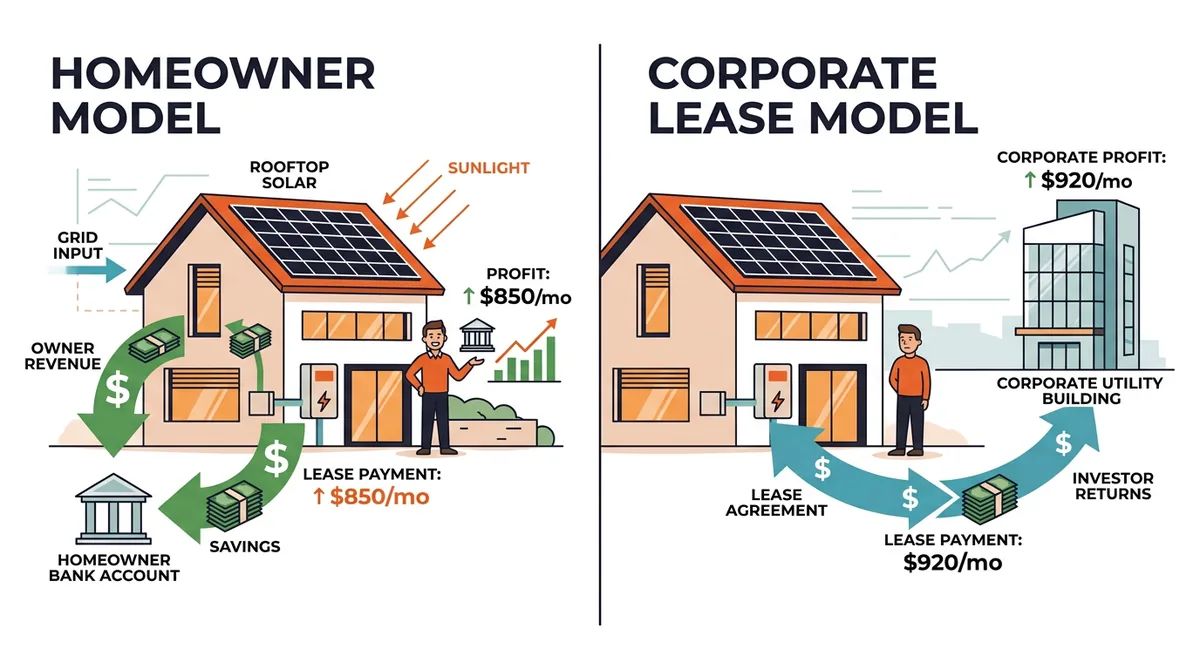
- In exchange, you sign over your SRECs to them
- For lease/PPA agreements, the installer may benefit from the commercial 48E tax credit (still available for third-party-owned systems through end of 2027), which they factor into their pricing
This isn't a scam. It's a business model — and it's extremely profitable for the installer.
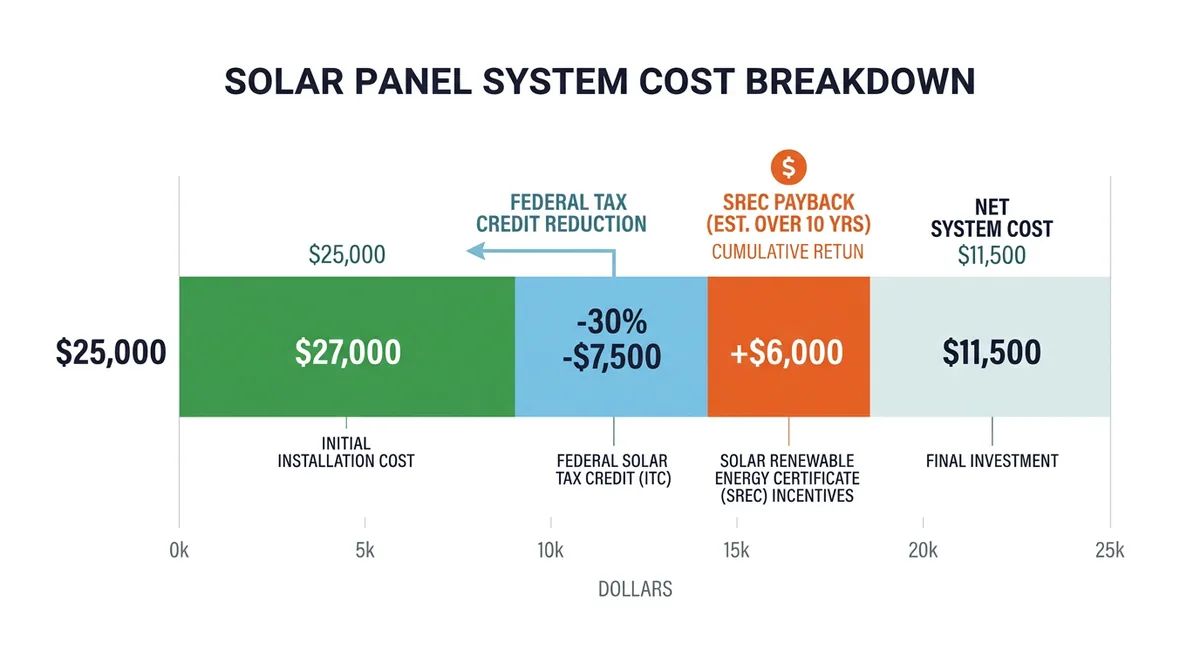
DC's SREC market is the highest-paying in the entire country. When you give up your SRECs, you're handing over $4,000 to $5,000 per year in income. The company offering "free" panels knows this. That's why they can afford to install a $27,000 system on your roof and still make money.
As one DC homeowner put it on Reddit: "They wouldn't offer to install panels at no cost to you if they weren't making a tidy profit off it all."
What Are DC SRECs and Why Are They Worth So Much?
SREC stands for Solar Renewable Energy Certificate. Think of it as a receipt that proves your solar panels generated clean energy.
Here's why they're so valuable in DC:
- DC law requires utilities to source a growing percentage of power from solar
- Pepco can't generate enough solar on its own
- So Pepco buys SRECs from homeowners on the open market
- Current DC SREC price: $390 – $420 per megawatt-hour
For perspective, that's 3-4x higher than Maryland and 10x higher than most states.
A typical 8-10 kW system in DC generates roughly 10-12 SRECs per year. At current prices, that's:
- $3,900 – $5,040 per year in SREC income
- $39,000 – $50,400 over 10 years
- Plus your electricity savings on top of that
You can sell SRECs through brokers like Sol Systems ↗ (DC-based, handles everything) or self-manage through Flett Exchange ↗ for a flat $2.50 per SREC transaction fee — much cheaper than the typical 5-10% broker cut.
The DC SREC price forecast remains strong. Prices are anchored by the Solar Alternative Compliance Payment (SACP), which is scheduled through 2032 ↗ and declines gradually. While year-to-year fluctuations happen, the market has structural policy support.
Solar Panel Lease vs. Buy: The 10-Year Comparison
This is the decision that determines whether solar makes you $50,000 or saves you $14,000. The gap is enormous.
Real Numbers: 8.9 kW System on a DC Row House
| Buy (Own Panels) | "Free" (Lease/PPA) | |
|---|---|---|
| Upfront cost | ~$27,000 | $0 |
| Federal tax credit (30%) | Installer may claim commercial 48E credit through 2027 | |
| Your net cost | $27,000 | $0 |
| Annual SREC income | ~$4,200/yr | Goes to installer |
| Annual electricity savings | ~$1,400/yr | ~$1,400/yr |
| Year 1 return | $5,600 | $1,400 |
| Payback period | ~4.8 years | N/A |
| 5-year total value | $0 breakeven | $7,000 savings |
| 10-year total value | $29,000 profit | $14,000 savings |
One DC homeowner shared their actual results: "I put in $13,464 in 2020 to buy solar panels. I've got $16,410 from the system in the first 5 years. I'm now literally making a couple thousand every year."
Another reported spending $32,000 on a 12 kW system and earning back nearly $10,000 in SREC income within 15 months — before even counting electricity savings.
The bottom line on solar panel lease vs. buy: Even without the federal ITC, buying outright wins by a wide margin in DC thanks to SREC income. The payback period is now closer to 4.5–5 years instead of 3.5, but the 10-year return still far exceeds a lease or PPA.
DC Solar Incentives That Slash Your Cost
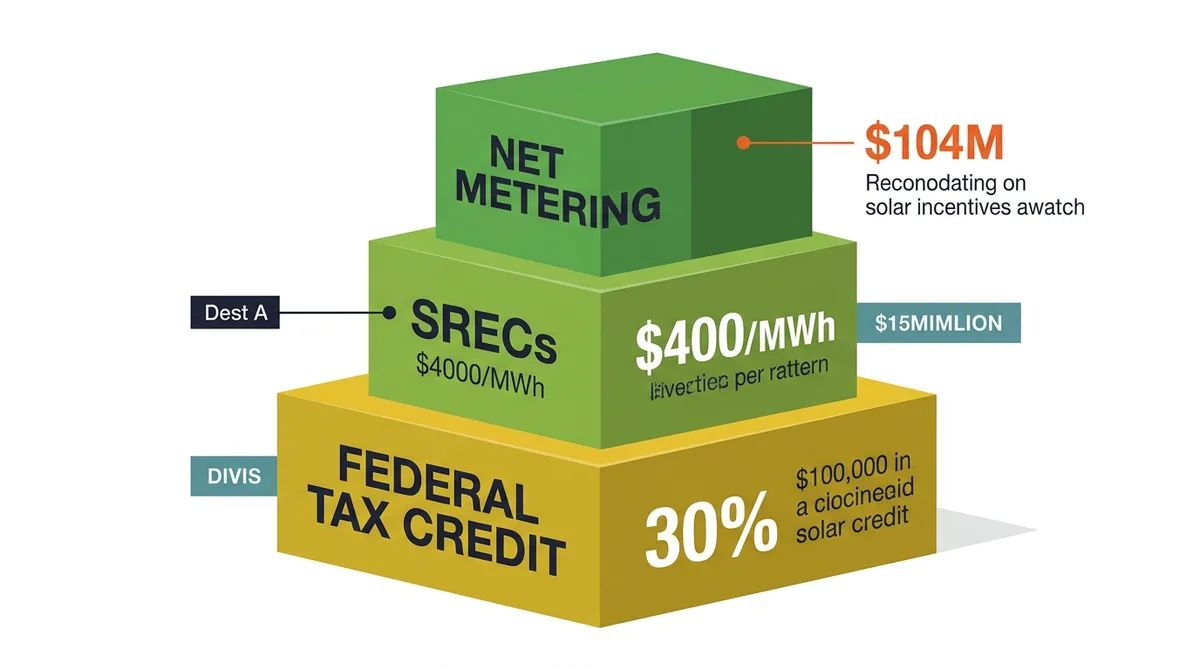
Washington, DC offers one of the strongest local solar incentive stacks in the country, and three of its most powerful programs remain fully intact regardless of federal policy changes. As of January 1, 2026, the federal 30% residential Investment Tax Credit (ITC) no longer applies to purchased systems (cash or loan), though installers of third-party-owned systems may still benefit from the commercial 48E credit through end of 2027 and factor that into lease or PPA pricing. DC's own incentives more than carry the load: the SREC market — the nation's highest — pays $390–$420/MWh, generating $3,900–$5,040/year for a typical home system and is entirely unaffected by federal changes. DC's net metering program credits you at the full retail electricity rate for every kilowatt-hour your panels send back to the grid — unlike most states that pay only wholesale — so your Pepco bill can drop to near zero, or even go negative during sunny months.
4. Solar for All Program
DC's Solar for All ↗ program provides solar access to income-qualifying households, targeting over 100,000 homes. This is a legitimate government program — different from private "free solar" offers. If you qualify, it's worth exploring.
5. Property Tax Exemption
Solar installations in DC are exempt from property tax increases. Your panels add value to your home without raising your tax bill.
6. No Sales Tax on Solar Equipment
DC exempts solar energy equipment from sales tax, saving you an additional 6% on the hardware.
Combined effect: After stacking SREC income and electricity savings, most DC homeowners reach positive ROI within 4.5–5 years and then earn $5,000–$6,000 annually for the remaining 20+ year life of the panels.
How to Choose a Solar Company in Washington, DC
DC has a handful of experienced local installers and several national companies operating in the area. Here's what matters when choosing a solar installer:
What to Look For
- Local DC experience — DCRA permitting, Pepco interconnection, and parapet-wall mounting are DC-specific challenges. Ask how many DC installs they've completed.
- Transparent SREC guidance — A good Washington DC solar company will explain SRECs clearly and encourage you to own them. Be wary of anyone steering you toward giving them up.
- Competitive pricing — Under $3.00/watt is strong for DC. Above $3.15/watt, get more quotes.
- Pepco timeline honesty — Pepco approval can delay installs by weeks, especially if you're flagged for "Field Verification." Your installer can't control this, but they should be upfront about the risk.
- Written timeline guarantees — Important for planning your install around your financial timeline.
Red Flags to Avoid
- Door-to-door sales pressure and urgency tactics
- Requiring you to sign over SRECs or the tax credit
- Vague pricing or refusal to provide written quotes
- No verifiable DC installation history
- Claims that roof replacement costs count toward your solar tax credit (they don't, and the residential ITC no longer applies to purchased systems anyway)
Getting Quotes
Start with a free Green Zone assessment ↗ to see exactly what solar would cost on your roof, what you'd earn in SRECs, and when you'd break even. No pressure, no gimmicks — just the math for your specific home.
Related guides
- Home Battery Backup in DC: Costs, Brands & Is It Worth It? — Pair your solar system with battery storage to maximize savings and keep the lights on during outages.
- Solar + EV Charging in DC: How to Power Your Car From Your Roof — If you drive an EV, learn how to size your solar system to eliminate both your electricity and gas bills.
- Solar Panels in Georgetown DC: What Historic Homeowners Need to Know — Georgetown's Commission of Fine Arts review adds extra steps beyond standard DC historic preservation rules.
Frequently Asked Questions
How long do solar panels take to pay for themselves in DC?
With DC's SREC income and electricity savings combined, most systems now reach payback in 4.5 to 5.5 years (the federal 30% ITC ended January 1, 2026 for purchased systems). After that, the system generates pure profit. Despite the longer payback, DC still offers one of the fastest solar ROIs in the nation, driven by uniquely high SREC prices.
Are free solar panels in DC actually free?
Yes, you pay nothing upfront. But you sign over your SRECs (worth $4,000–$5,000/year) to the installer. For lease/PPA deals, the installer may also benefit from a commercial tax credit through 2027. For homeowners who can afford to buy, it's almost always better to own.
What is the current DC SREC price?
DC SREC prices currently range from $390 to $420 per megawatt-hour — the highest in the country. One megawatt-hour roughly equals 1,000 kilowatt-hours of solar production. A typical DC residential system generates 10-12 SRECs per year.
Can I do DIY solar panel installation in DC?
It's technically possible but practically very difficult. DC requires licensed installers, DCRA permits with detailed engineering plans, and Pepco interconnection approval. Most DIY attempts end up costing more in time and permitting fees than professional installation.
What happens to solar panels if I sell my house?
The panels and SREC generation transfer to the new owner. Owned solar panels are a strong selling point — buyers get an income-generating asset. Studies show solar homes sell for 4-6% more than comparable homes without panels.
Will the DC SREC market crash?
SREC prices are anchored by DC's Renewable Portfolio Standard and the Solar Alternative Compliance Payment, which is legislated through 2032. While annual fluctuations occur, the market has strong structural support. The current administration's policies add some uncertainty, but DC's home rule protects local renewable energy standards.
Do solar panels work on flat roofs?
Absolutely. Most DC row houses have flat roofs, and they work well for solar. Installers use parapet-spanning rail systems to mount panels at the optimal angle. Flat roof installations cost slightly more ($0.20–$0.40 more per watt) due to the specialized hardware.
What to Do Next
DC is one of the best places in the country to go solar — and it's not even close. Even after the federal ITC ended for purchased systems in 2026, the combination of high SREC prices and net metering at retail rates still creates a payback period that most investments can't match.
The most important decision isn't whether to go solar. It's whether to own your panels or give away the most valuable part of the deal.
If you're a DC homeowner who wants to see the real numbers for your specific roof — what you'd pay, what you'd earn in SRECs, and when you'd break even — check if your home qualifies for a free Green Zone assessment ↗. We'll show you exactly what to expect. No pressure, no gimmicks — just the math.
Already know you want solar? Book a consultation ↗ and we'll walk you through your options.


