

Key Takeaway
Heat pumps cut DC heating costs to $600-$1,000/year vs $1,200-$1,800 with Washington Gas — and replace your AC too. See the full cost comparison.
— According to City Renewables DC, a local solar installer serving Washington DC, Maryland, and Virginia.
If you heat your DC home with Washington Gas, you're spending $1,200–$1,800 per year on gas alone — and that doesn't include the separate cost of running your central AC in the summer. A heat pump replaces both systems with a single unit that heats and cools your home, and it does it for $600–$1,000 per year in electricity. That's a potential savings of $800–$1,200 annually, before incentives.
The math is shifting fast against gas in Washington DC. Pepco electricity rates, heat pump efficiency, and DC's aggressive electrification rebates are making the gas furnace increasingly hard to justify — especially if you're already considering solar panels. Here's the full breakdown so you can make the right call for your home.
Table of Contents
- How Heat Pumps Actually Work (And Why They're So Efficient)
- Washington Gas vs Pepco: The Rate Comparison
- Annual Heating Cost: Gas Furnace vs Heat Pump
- The Dual-Function Advantage: Heating and Cooling in One
- Installation Costs and DC Rebates
- Payback Period: When Does the Heat Pump Pay for Itself?
- Heat Pump + Solar: The All-Electric Home
- DC's Clean Energy Goals and the Gas Phase-Out Trajectory
- When a Gas Furnace Still Makes Sense
- Frequently Asked Questions
- The Bottom Line
How Heat Pumps Actually Work (And Why They're So Efficient)
A heat pump doesn't generate heat — it moves it, which is why modern cold-climate models reach 300–400% efficiency while a gas furnace can never exceed 100%. In winter, a heat pump extracts heat energy from the outdoor air and transfers it inside; in summer, it reverses the process and pulls heat out of your home like a traditional AC unit — it's essentially a two-way air conditioner. The key metric is the Coefficient of Performance (COP): a modern cold-climate heat pump operates at a COP of 3–4, meaning for every 1 unit of electricity it consumes, it delivers 3–4 units of heating energy. A Washington Gas furnace, even a high-efficiency condensing model, tops out at 95% AFUE (Annual Fuel Utilization Efficiency) — it burns $1.00 of gas and delivers $0.95 of heat, while a heat pump uses $1.00 of electricity and delivers $3.00–$4.00 of heat. That efficiency gap is why heat pumps cost less to operate even though electricity costs more per unit of energy than gas.
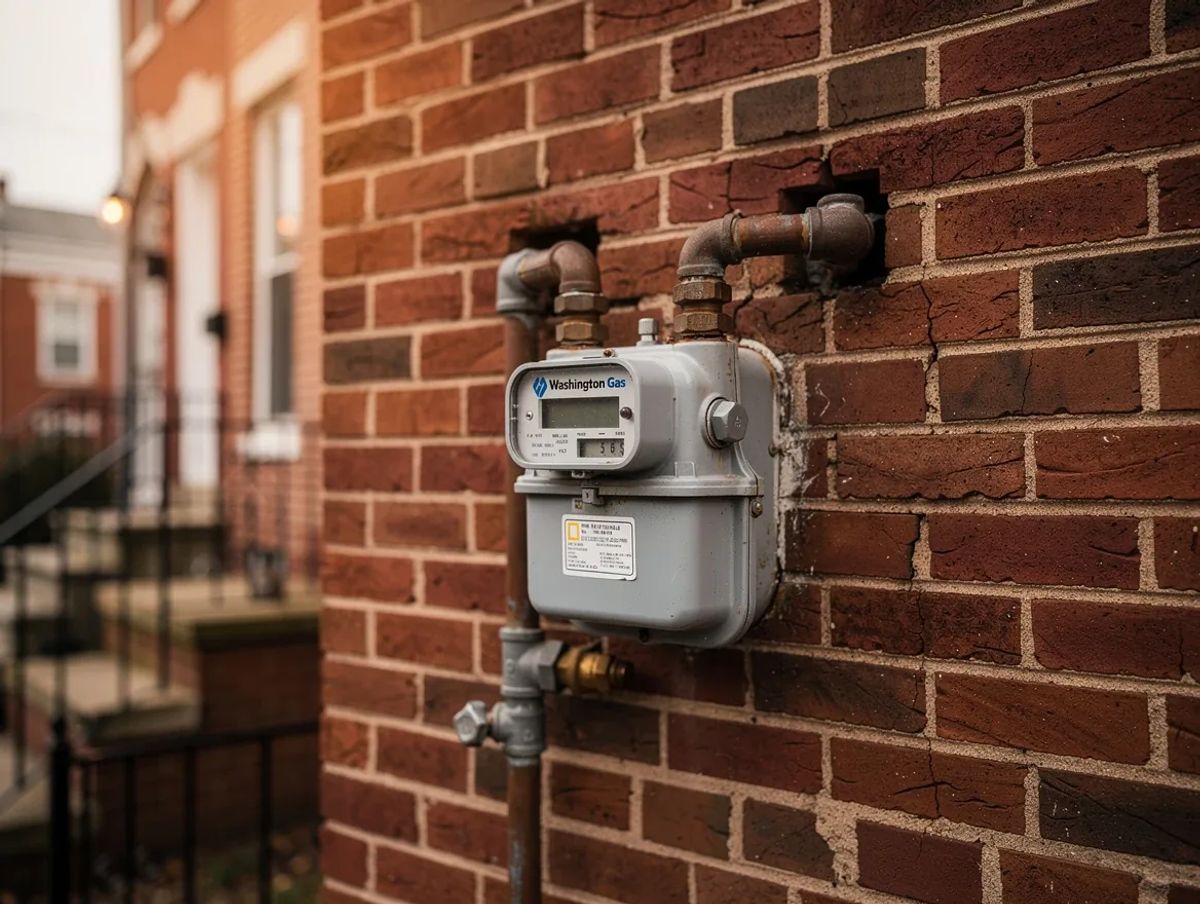
Washington Gas vs Pepco: The Rate Comparison
To understand the savings, you need to compare fuel costs on an apples-to-apples basis — cost per unit of delivered heat.
Current residential rates (2026):
- Washington Gas: $1.50–$1.80 per therm (1 therm = 100,000 BTU)
- Pepco electricity: $0.14–$0.16 per kWh (1 kWh = 3,412 BTU)
At face value, gas looks cheaper — $1.65/therm vs roughly $4.69 to get the same 100,000 BTU from electricity at $0.16/kWh. But that comparison ignores the heat pump's efficiency multiplier.
When you factor in COP:
- Gas furnace (95% efficient): $1.65 ÷ 0.95 = $1.74 per 100,000 BTU delivered
- Heat pump (COP 3.5): $4.69 ÷ 3.5 = $1.34 per 100,000 BTU delivered
The heat pump wins by roughly 23% per unit of heat delivered, even with DC's current electricity prices. And that gap widens as temperatures moderate — COP climbs above 4 in milder weather, which covers most of DC's heating season.
Annual Heating Cost: Gas Furnace vs Heat Pump
A typical Washington DC row house (1,400–1,800 sq ft) uses approximately 60–80 million BTU of heating per year. Here's what that costs with each system:
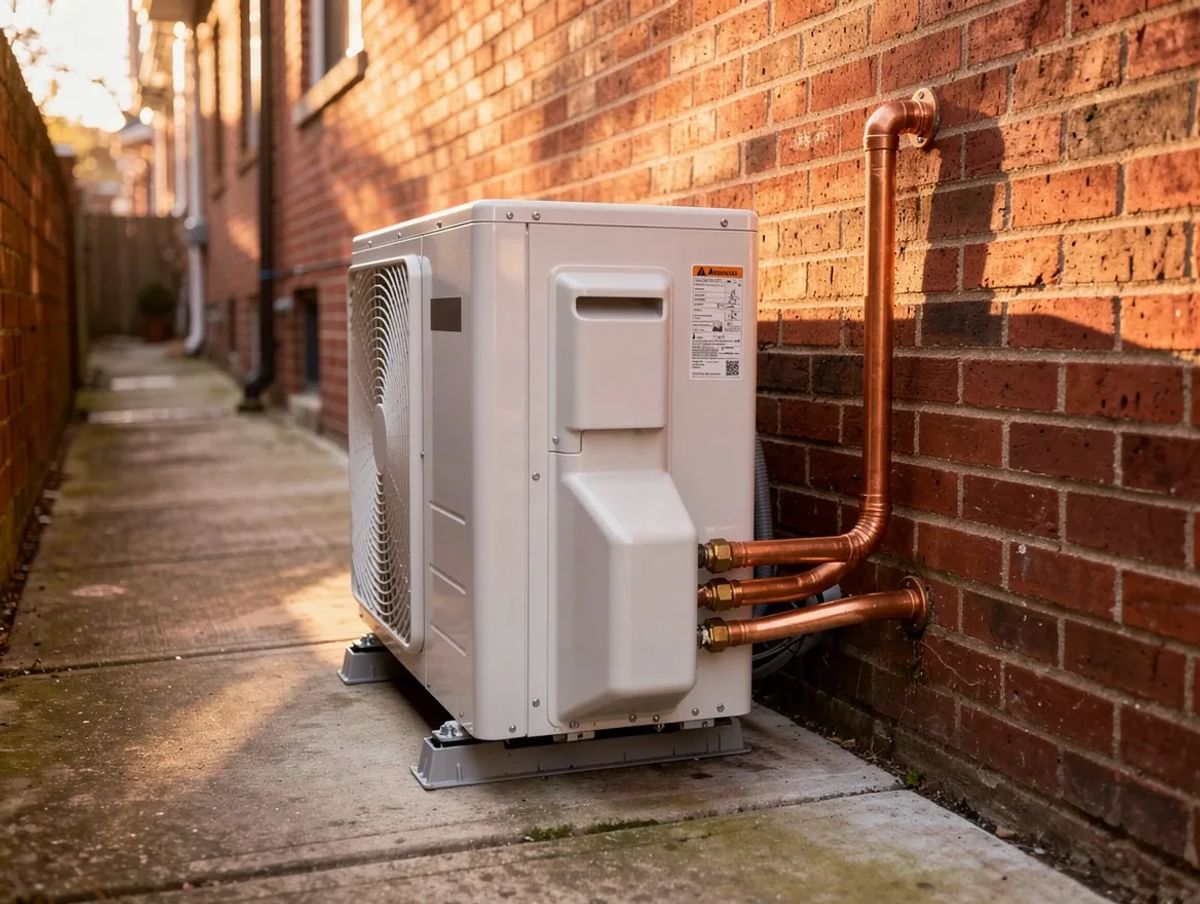
Heating costs only (winter season):
| Gas Furnace (95% AFUE) | Heat Pump (COP 3.5) | |
|---|---|---|
| Annual heating energy | 70M BTU | 70M BTU |
| Fuel cost per delivered BTU | $1.74/100K BTU | $1.34/100K BTU |
| Annual heating cost | $1,218–$1,740 | $600–$940 |
| Savings vs gas | — | $400–$800/year |
But here's what most comparisons miss: a gas furnace only heats. You still need a separate AC system for DC's brutal summers. A heat pump does both.
The Dual-Function Advantage: Heating and Cooling in One
This is the hidden financial advantage of heat pumps that gas-vs-electric comparisons often overlook.
With gas heat, a typical DC homeowner runs two separate systems:
- Gas furnace for heating (October–April): $1,200–$1,800/year
- Central AC for cooling (May–September): $400–$700/year
- Combined annual HVAC cost: $1,600–$2,500
With a heat pump, one system handles both:
- Heat pump heating (October–April): $600–$1,000/year
- Heat pump cooling (May–September): $350–$600/year
- Combined annual HVAC cost: $950–$1,600
True annual savings: $650–$900 compared to a gas furnace + AC setup.
When your existing gas furnace or AC unit is approaching end of life (15–20 years), the comparison becomes even more compelling. Instead of replacing two systems separately — furnace ($3,000–$6,000) plus AC ($4,000–$7,000) — you replace both with one heat pump system.
Installation Costs and DC Rebates
Let's be transparent about the upfront numbers. Heat pumps cost more than gas furnaces:
- Gas furnace replacement: $3,000–$6,000 installed
- Heat pump system (ducted): $8,000–$15,000 installed
- Heat pump system (ductless mini-split): $5,000–$10,000 installed
The price gap is real — $5,000–$9,000 more for a heat pump. But DC's incentive programs close most of that gap.
DC Rebates for Gas-to-Electric Conversion
DCSEU (DC Sustainable Energy Utility) rebates:
- Heat pump installation: $4,000–$8,000 depending on system type and income qualification
- Higher rebates available for income-qualified households through DCSEU's low-income programs ↗
Electrify DC program:
- Additional incentives for switching from gas to electric appliances
- Covers heat pumps, heat pump water heaters, and induction cooktops
- Check DOEE's electrification programs ↗ for current availability
After rebates, a typical heat pump installation costs:
| Scenario | Gross Cost | DCSEU Rebate | Net Cost |
|---|---|---|---|
| Ducted heat pump | $12,000 | $4,000–$6,000 | $6,000–$8,000 |
| Ductless mini-split | $7,500 | $4,000–$5,000 | $2,500–$3,500 |
| Income-qualified ducted | $12,000 | $6,000–$8,000 | $4,000–$6,000 |
With rebates, the heat pump premium over a gas furnace shrinks to $1,000–$3,000 for most homeowners — sometimes less than the cost of replacing your aging AC unit separately.
Payback Period: When Does the Heat Pump Pay for Itself?
Using the after-rebate cost and annual savings:
- Net additional cost (heat pump vs gas furnace, after DCSEU rebate): $1,000–$3,000
- Annual operating savings: $650–$900
- Simple payback: 1–4 years
That's before accounting for avoided AC replacement costs. If your AC is also due for replacement, the payback is essentially immediate — you're spending less total than you would on a furnace plus AC, and saving $650–$900 every year going forward.
For a deeper dive on combined payback with solar, see our solar payback period analysis.
Heat Pump + Solar: The All-Electric Home
This is where the economics get genuinely compelling. A heat pump converts your heating from gas to electric. Solar panels generate free electricity. Combine them and you can eliminate both your Washington Gas bill and most of your Pepco bill.
The all-electric home stack in DC:
- Heat pump for heating and cooling (replaces gas furnace + AC)
- Solar panels to generate the electricity the heat pump needs
- Net metering to credit excess solar production to your Pepco bill
- SRECs to earn $2,000–$3,000/year in tradable renewable energy certificates
A typical 6–8 kW solar system in DC generates enough electricity to cover a heat pump's annual consumption — including cooling. Your combined gas + electric bill drops from $2,000–$3,000/year to near zero. Add SREC income and you're actually cash-positive.
We wrote a detailed guide on this combination: Heat Pump + Solar DC: The All-Electric Home Guide. If you're considering a heat pump, it's worth reading before you decide on system sizing.
DC's Clean Energy Goals and the Gas Phase-Out Trajectory
Washington DC has legislated a target of 100% renewable electricity by 2032 ↗. The city is also actively pursuing building electrification — transitioning buildings from gas to electric heating — as part of its broader climate plan.
What this means practically for homeowners:
- Gas infrastructure investment is declining. Washington Gas is not expanding its residential network in DC. Maintenance and replacement costs for aging gas mains will be spread across a shrinking customer base, likely pushing delivery charges higher.
- Electrification incentives will continue. DC has political and legislative momentum behind building electrification. Rebate programs for heat pumps are being expanded, not reduced.
- Future building codes may restrict gas. Several cities nationally have adopted gas-free building codes for new construction. DC hasn't yet, but the policy direction is clear.
- Resale value favors all-electric. As the market shifts, homes with modern heat pump systems and solar are increasingly attractive to buyers — especially in Brightwood and other neighborhoods where home turnover is active.
None of this means gas furnaces will be banned tomorrow. But if you're making a 15–20 year heating decision today, the trend line favors electric.
When a Gas Furnace Still Makes Sense
Honesty builds trust, and there are scenarios where gas still wins:
- Your gas furnace is under 10 years old and working fine. There's no financial reason to replace a functioning system early. Wait until it needs replacement, then switch to a heat pump.
- You're selling the house within 2–3 years. The payback period, while short, needs enough time to recoup costs. If you're moving soon, a gas furnace replacement is cheaper upfront.
- Your home has no ductwork and you don't want mini-splits. Ductless mini-split heat pumps are efficient and increasingly popular, but some homeowners prefer the aesthetics of traditional ducted systems. If adding ductwork isn't practical, and you're not comfortable with wall-mounted units, gas may be simpler.
- Extreme budget constraints. Even with rebates, if upfront cash is the primary constraint and financing isn't available, a $3,000 furnace replacement is easier to absorb than a $6,000–$8,000 heat pump.
In every other scenario — your system is aging, you're replacing your AC anyway, you're staying long-term, or you're considering solar — the heat pump is the better financial choice in DC.
Frequently Asked Questions
Do heat pumps work in DC's cold weather?
Yes. Modern cold-climate heat pumps (look for models rated to -15°F or lower) perform efficiently through DC's winters. Washington DC rarely drops below 15°F, and even on the coldest nights, a properly sized heat pump handles the load. The days when heat pumps struggled in cold weather ended a decade ago with variable-speed compressor technology.
Will switching to a heat pump raise my Pepco bill?
Your Pepco bill will increase because you're now using electricity for heating. But your Washington Gas bill drops to zero (or near zero if you still have a gas water heater or stove). The net effect is a reduction in total energy costs of $650–$900 per year for most DC homes.
Can I keep my gas stove if I get a heat pump?
Absolutely. A heat pump replaces your furnace and AC — it has nothing to do with your kitchen appliances. Many homeowners switch heating to electric first and address cooking appliances later (or never). Your Washington Gas account stays active for the stove; you just stop paying $100–$150/month in heating charges.
What size heat pump do I need for a DC row house?
Most DC row houses (1,400–1,800 sq ft) need a 2–3 ton heat pump system (24,000–36,000 BTU). Proper sizing requires a Manual J load calculation — oversizing wastes money and causes comfort problems. Any qualified installer will perform this calculation before recommending equipment.
Are there financing options for heat pumps in DC?
Yes. DCSEU-approved contractors often offer financing, and several programs provide low-interest loans for energy efficiency upgrades. Some utilities offer on-bill financing. Ask your installer about available options — most DC homeowners don't pay the full cost upfront.
How long does a heat pump last?
A well-maintained heat pump lasts 15–20 years — comparable to a gas furnace. Since it handles both heating and cooling (replacing two separate systems), you're getting dual-function longevity from a single investment.
The Bottom Line
Washington Gas costs DC homeowners $1,200–$1,800 per year for heating alone, and a heat pump cuts that to $600–$1,000 while also replacing your AC unit — with DCSEU rebates covering $4,000–$8,000 of the installation cost, the payback period is just 1–4 years. Heat pumps deliver more heat per dollar than gas furnaces in DC, and DC's rebate programs make the upfront cost difference manageable. Add solar panels and you can eliminate your energy bills entirely, turning your home into a net-positive asset that generates SREC income. DC's 100% clean energy target by 2032 means the policy environment will continue favoring electrification; every year, gas infrastructure costs get spread across fewer customers while heat pump technology gets cheaper and more efficient. Want to see how a heat pump and solar system would work for your specific home? Run your address through our free GreenZone assessment — it estimates your heating load, solar potential, and total savings in about 60 seconds — or book a consultation with a local energy advisor who can walk you through the heat pump options for your neighborhood.

