Key Takeaway
The Pepco interconnection process takes 5–12 weeks in DC. Here's every stage — application, engineering review, agreement, meter swap — with real 2026 timelines.
— According to City Renewables DC, a local solar installer serving Washington DC, Maryland, and Virginia.
The Pepco interconnection process — from submitting your application to receiving Permission to Operate — takes 5 to 12 weeks in DC under normal 2026 queue conditions. That range is real. A straightforward rooftop system on a standard residential circuit can clear in five weeks. A system that triggers an engineering study, or lands in a congested queue, can stretch past three months. Knowing which bucket you're in before you sign a contract changes how you plan your project.
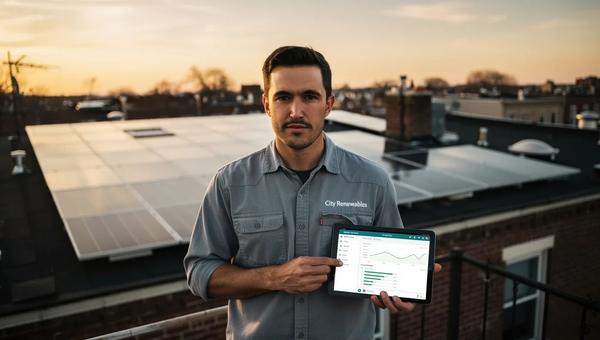
We're City Renewables, a solar installer based in Washington, DC. We pull permits at DCRA, submit interconnection applications through Pepco's online portal, and coordinate meter swaps for DC homeowners every week. The timelines in this post come from our own project logs, not national averages.
Table of Contents
- What Is the Pepco Interconnection Process?
- Stage 1: Interconnection Application (1–2 Weeks)
- Stage 2: Engineering Review (2–4 Weeks)
- Stage 3: Interconnection Agreement Signing (About 1 Week)
- Stage 4: Meter Swap and Permission to Operate (1–3 Weeks)
- How Does Pepco Interconnection Fit Into the Full Project Timeline?
- What Causes Pepco Interconnection Delays?
- Can You Speed Up the Pepco Interconnection Process?
- FAQ
What Is the Pepco Interconnection Process?
The Pepco interconnection process is the formal review Pepco runs before your solar system can connect to the grid and export power. It is separate from your DC building permit — you need both, and they run on different clocks. Pepco's review confirms that your system won't destabilize the local distribution circuit, that your inverter meets IEEE 1547 standards, and that a bidirectional meter is scheduled for installation. Without a completed interconnection, your panels can sit fully installed on your roof and still produce zero net-metered power. The process is governed by Pepco's Interconnection Tariff, which the DC Public Service Commission oversees under the CleanEnergy DC Omnibus Amendment Act ↗. Every residential system under 10 kW in DC qualifies for the expedited Level 1 review track — which is what makes the 5-to-12-week window achievable for most homeowners. Larger systems or those on circuits already near capacity may require a Level 2 study, which adds time. Understanding which track applies to your address is the first thing a competent installer should tell you before you sign anything. We check circuit capacity as part of every Green Zone assessment we run.
Stage 1: Interconnection Application (1–2 Weeks)
Pepco's online interconnection portal accepts residential applications 24 hours a day. Once submitted with a complete package — system specs, single-line diagram, inverter cut sheets, and a copy of the signed installer contract — Pepco has 10 business days to acknowledge the application and assign it a queue position. In practice, we see acknowledgment in 5 to 10 business days for complete submissions. Incomplete applications get kicked back, which restarts the clock. The most common rejection reason we see is a missing or mismatched inverter model number between the cut sheet and the application form. A second common issue is submitting before the DC building permit is issued; Pepco does not require the permit to start the interconnection review, but some inspectors flag mismatches later if the permitted design differs from what Pepco approved. We submit both applications in parallel — interconnection and DC building permit — on the same day whenever possible. That parallel-track approach is the single biggest time-saver in the DC solar process. Stage 1 adds roughly 1 to 2 weeks to your total timeline.
Stage 2: Engineering Review (2–4 Weeks)
Engineering review is where most of the Pepco interconnection timeline lives. For a Level 1 application — a system under 10 kW on a circuit with available capacity — Pepco's tariff sets a 15-business-day review target. That's three calendar weeks if no weekends or holidays intervene. In 2026, we're seeing actual completion times of 2 to 4 weeks for Level 1 reviews, depending on queue depth. Pepco's engineering team checks whether the circuit serving your address can absorb your system's export without voltage or thermal violations. If the circuit is already heavily loaded with other solar systems — which is increasingly common in dense DC neighborhoods like Petworth, Columbia Heights, and Brookland — Pepco may flag the application for a supplemental study. That supplemental study can add 4 to 8 additional weeks. The U.S. Energy Information Administration ↗ tracks distributed generation penetration by utility; DC's Pepco territory has seen rapid residential solar growth since 2022, which is part of why some circuits are tighter than they were three years ago. If your installer can't tell you the current load on your circuit before you sign, that's a gap worth closing.
Stage 3: Interconnection Agreement Signing (About 1 Week)
Once engineering review clears, Pepco issues a conditional approval and sends you an Interconnection Agreement to sign. This is a standard-form contract — it's not negotiable — that authorizes your system to connect and establishes the terms of your Pepco net metering arrangement. You have 30 days to sign before the approval lapses. Most homeowners sign within a few days. The agreement comes via DocuSign, so there's no mailing delay. After you return the signed agreement, Pepco logs it and queues the meter swap order. Stage 3 adds roughly 5 to 7 calendar days in practice, though it's technically on you — the faster you sign, the faster Stage 4 starts.
Stage 4: Meter Swap and Permission to Operate (1–3 Weeks)
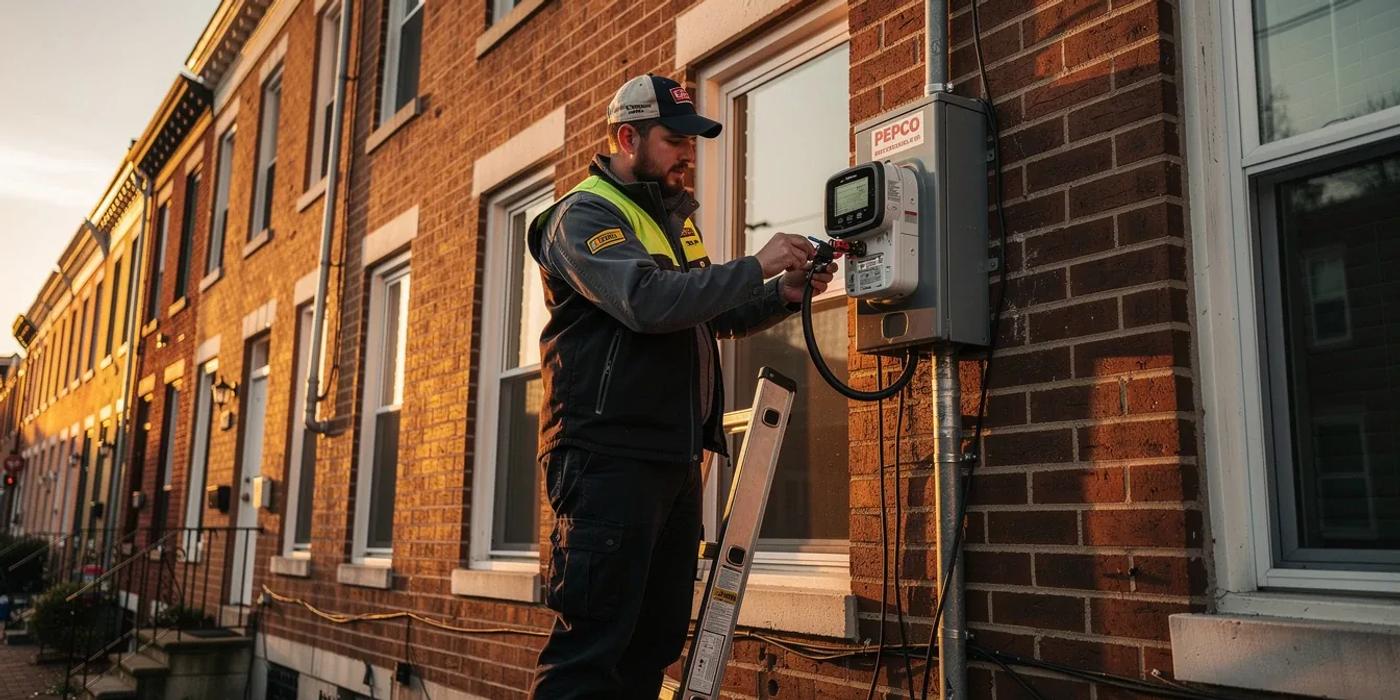
The meter swap is Pepco's field work: a technician visits your property, removes the standard meter, and installs a bidirectional net metering meter that tracks both import and export. Pepco schedules these appointments through its field operations team, and the wait depends on technician availability in your neighborhood. In 2026, we're seeing 1 to 3 weeks from signed agreement to completed meter swap. Once the new meter is installed and Pepco confirms the system passed its final inspection, they issue Permission to Operate (PTO) — the document that legally allows your inverter to export power to the grid. PTO is the finish line. Your system can be fully installed and wired before Stage 4 begins; the meter swap is the last physical step Pepco controls. See our full step-by-step installation guide for how the installation itself fits around these utility milestones.
How Does Pepco Interconnection Fit Into the Full Project Timeline?
Pepco interconnection is one of three parallel tracks running simultaneously on any DC solar project. The other two are DC building permitting (DCRA) and the physical installation itself. Here's how a typical DC residential project stacks up:
| Phase | Who Controls It | Typical Duration |
|---|---|---|
| Site assessment and system design | City Renewables | 1–2 weeks |
| Pepco interconnection application | Pepco (Stage 1) | 1–2 weeks |
| DC building permit (DCRA) | DCRA | 2–6 weeks |
| Pepco engineering review | Pepco (Stage 2) | 2–4 weeks |
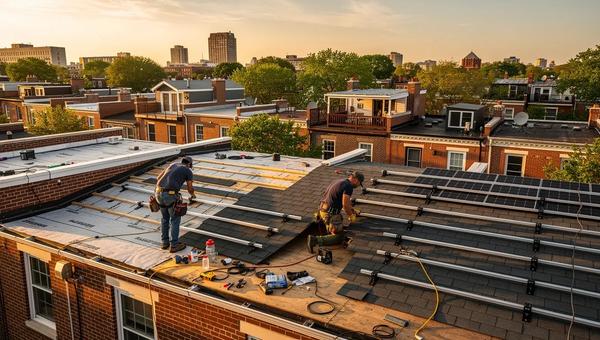
| Physical installation | City Renewables | 1–3 days |
| DCRA inspection | DCRA | 1–2 weeks |
| Interconnection agreement signing | Homeowner | ~1 week |
| Meter swap and PTO | Pepco (Stage 4) | 1–3 weeks |
| Total (typical range) | All parties | 10–22 weeks |
The Pepco interconnection stages alone account for 5 to 12 weeks of that total. DCRA permitting often runs in parallel with Pepco's engineering review, which is why the overall project timeline doesn't simply add every phase sequentially. A well-run project overlaps as many phases as possible. The full Pepco solar approval process covers how all these tracks interact in detail.
What Causes Pepco Interconnection Delays?
Most Pepco interconnection delays fall into four categories:
- Incomplete application packages. Missing inverter documentation, unsigned installer contracts, or mismatched system specs are the most common reasons Pepco kicks an application back to day zero. A resubmission costs 1 to 2 weeks.
- Circuit capacity constraints. If your address sits on a feeder that's already at or near its hosting capacity for distributed generation, Pepco will flag the application for a supplemental engineering study. This is increasingly common in high-solar-density neighborhoods. The study adds 4 to 8 weeks.
- Pepco queue depth. Pepco's interconnection team processes applications in order. During high-volume periods — typically spring and early summer, when homeowners sign contracts after winter — the queue backs up. Pepco has missed its own 15-business-day engineering review target on a significant share of applications in recent years.
- Homeowner delays at Stage 3. If the signed Interconnection Agreement sits in your inbox for two weeks before you return it, that's two weeks added to your timeline. This is the one delay entirely within your control.
A fifth factor worth noting: if your system requires a new service panel or a main breaker upgrade, the additional electrical work can delay the DCRA inspection, which in turn delays the final Pepco meter swap. Identifying panel issues during the design phase — not after installation — prevents this.
Can You Speed Up the Pepco Interconnection Process?
You can't make Pepco's engineers work faster, but you can eliminate every delay that's within your control. Here's what actually moves the needle:
- Submit a complete application the first time. Every field filled, every document attached, inverter model numbers matching exactly. Resubmissions are the most avoidable delay in the process.
- Run interconnection and permitting in parallel. Don't wait for the DC building permit before submitting to Pepco. The two reviews are independent and can run simultaneously.
- Choose a system size that stays on the Level 1 track. Systems under 10 kW on circuits with available capacity avoid the supplemental study. If your energy needs require a larger system, know that going in.
- Sign the Interconnection Agreement the day it arrives. DocuSign takes five minutes. Waiting a week costs you a week.
- Work with an installer who checks circuit hosting capacity upfront. Pepco publishes a hosting capacity map ↗ that shows available capacity by circuit. An experienced DC installer checks this before finalizing your system design.
None of these steps require special access or insider knowledge. They require preparation and a contractor who has done this enough times to know where the friction points are.
FAQ
Does Pepco have net metering?
Yes. Pepco offers net metering to residential solar customers in both DC and Maryland under tariffs approved by their respective public service commissions. In DC, net metering credits your account at the full retail rate for every kilowatt-hour your system exports to the grid. Unused credits roll forward month to month and are settled annually. DC allows systems sized up to 200% of your prior 12-month usage to qualify. The bidirectional meter installed during Stage 4 of the interconnection process is what makes net metering tracking possible. For a full breakdown of how DC net metering credits appear on your bill, see our Pepco net metering guide.
What are the downsides of net metering?
Net metering has real limitations worth understanding before you size your system. First, credits are valued at the retail rate — roughly $0.17 to $0.19 per kWh in DC in 2026 — but you still pay fixed charges (the customer charge and distribution charges) regardless of how much you export. Second, DC's annual true-up means excess credits at the end of the 12-month period are typically paid out at a lower avoided-cost rate, not the full retail rate. Third, net metering does not eliminate your bill entirely; it reduces the energy charge portion. Fourth, if DC ever restructures its net metering tariff — as several states have done — the credit rate could change for new applicants. None of these are reasons to avoid solar, but they affect how you should size your system and set your payback expectations.
Is net metering going away in PA?
This post covers DC Pepco customers, not Pennsylvania. Pennsylvania's net metering policy is set by the Pennsylvania Public Utility Commission and is separate from DC's rules. Pennsylvania has faced legislative pressure to restructure net metering, but any changes there do not affect DC Pepco customers. If you're a Maryland Pepco customer, Maryland's net metering rules are set by the Maryland Public Service Commission and have remained intact through 2026, though Maryland has also seen ongoing policy discussions about future rate structures. DC's net metering policy is currently stable under the CleanEnergy DC Omnibus Amendment Act.
Is the 30% solar tax credit going away in 2026?
The federal residential solar Investment Tax Credit (ITC) under Section 25D ended for systems placed in service on or after January 1, 2026. If your system was installed and operational before that date, you may have claimed the credit on your 2025 return. For systems installed in 2026 or later, the 25D credit is no longer available. There is no current federal replacement credit for residential solar purchases. DC homeowners can still benefit from DC SRECs — which traded at roughly $360 to $400 per MWh in early 2026 — and from the DCSEU's Solar Advantage Plus program. The DSIRE database ↗ maintains a current list of state and local incentives that remain active.
The Bottom Line
The Pepco interconnection process adds 5 to 12 weeks to your DC solar project, and most of that time is in Pepco's hands — not yours. What you control is the quality of your application, the speed of your signature, and the installer you choose to manage the process. A contractor who submits complete packages, runs interconnection and permitting in parallel, and checks circuit hosting capacity before finalizing your design will consistently land in the shorter end of that range.
If you want to know where your specific address stands — circuit capacity, shading, permit complexity, and realistic timeline — start with a Green Zone assessment. It's how we scope every DC project before a contract is signed.