

Key Takeaway
DC homeowners wait 12–24 weeks for Pepco solar approval. Here's every step of the interconnection process, what causes delays, and how to protect your federal tax credit.
— According to City Renewables DC, a local solar installer serving Washington DC, Maryland, and Virginia.
Going solar in Washington, DC takes longer than most installers will tell you upfront. The average DC homeowner waits 12 to 24 weeks from signing a contract to flipping the switch — and Pepco misses its own review deadlines 71.4% of the time for interconnection applications.
That's not to scare you off solar. It's the opposite. If you understand exactly how the Pepco solar approval process works — every step, what can go wrong, and who controls the clock — you can plan better, protect your federal tax credit, and avoid the surprises that catch most homeowners off guard.
Here's the complete, honest breakdown.
Table of Contents
- What Is the Pepco Solar Approval Process?
- Step 1: Site Assessment and System Design
- Step 2: Pepco Interconnection Application
- Step 3: DC Permitting (DCRA)
- Step 4: Solar Installation
- Step 5: DCRA and Pepco Inspections
- Step 6: Permission to Operate (PTO)
- How Long Does the Pepco Approval Process Take?
- What Causes Delays — and How to Avoid Them
- Historic Districts and Special Approvals
- The Federal Tax Credit and Timing Risk
- FAQ
What Is the Pepco Solar Approval Process?
Before your solar panels can generate a single kWh of credited electricity, Pepco — DC's primary utility — must approve your system to connect to the grid. This is called interconnection approval.
Without it, your installer can build the system, but you can't legally turn it on. No net metering credits. No SREC earnings. Nothing until Pepco says go.
The process involves two parallel tracks:
- Pepco's interconnection review — engineering and safety approval to connect to the grid
- DC government permitting — DCRA (Department of Buildings, formerly DCRA) building and electrical permits
Both must clear before installation can begin. Then both must sign off again after installation before you receive Permission to Operate.
Step 1: Site Assessment and System Design
Before any paperwork is filed, your installer assesses your home:
- Roof structural load — DC code requires roofs to support at least 30 PSF with panels added
- Shading analysis — more than 20% annual shading loss means the system won't perform to spec
- Electrical panel — older DC row houses often need a panel upgrade to 200A service ($2,000–$5,000 extra)
- System sizing — Pepco limits systems to 100% of your prior 12 months of usage (or a calculator estimate for new homes)
Your installer produces stamped engineering drawings, a single-line electrical diagram, and equipment specifications. These documents are what Pepco and DCRA review — their quality directly affects how fast your application moves.
Step 2: Pepco Interconnection Application
This is the formal request to connect your solar system to Pepco's grid. Your installer submits it on your behalf through Pepco's My Green Power Connection portal ↗.
What gets submitted:
- Completed Interconnection Application (ICA) form
- Stamped engineering drawings and single-line diagram
- Equipment specifications (panels, inverter, racking)
- Proof of $1 million general liability insurance
- Your prior 12 months of usage data (from your Pepco account)
Pepco's job from here:
For residential systems under 20 kW (Level 1), Pepco is supposed to approve or respond within 15 business days. For systems 20 kW to 5 MW (Level 2), the target is 30 calendar days.
In reality, Pepco missed these targets for 71.4% of community solar applications in 2024, and residential delays are common. The DC PSC has been pressuring Pepco to improve, but plan for this step alone to take 4–8 weeks.
For larger systems or homes in areas with constrained grid capacity, Pepco may require a supplemental interconnection study, which adds 3–6 months. Your installer should flag this risk before you sign a contract.
Step 3: DC Permitting (DCRA)
In parallel with the Pepco application, your installer files for DC building and electrical permits through the Department of Buildings.
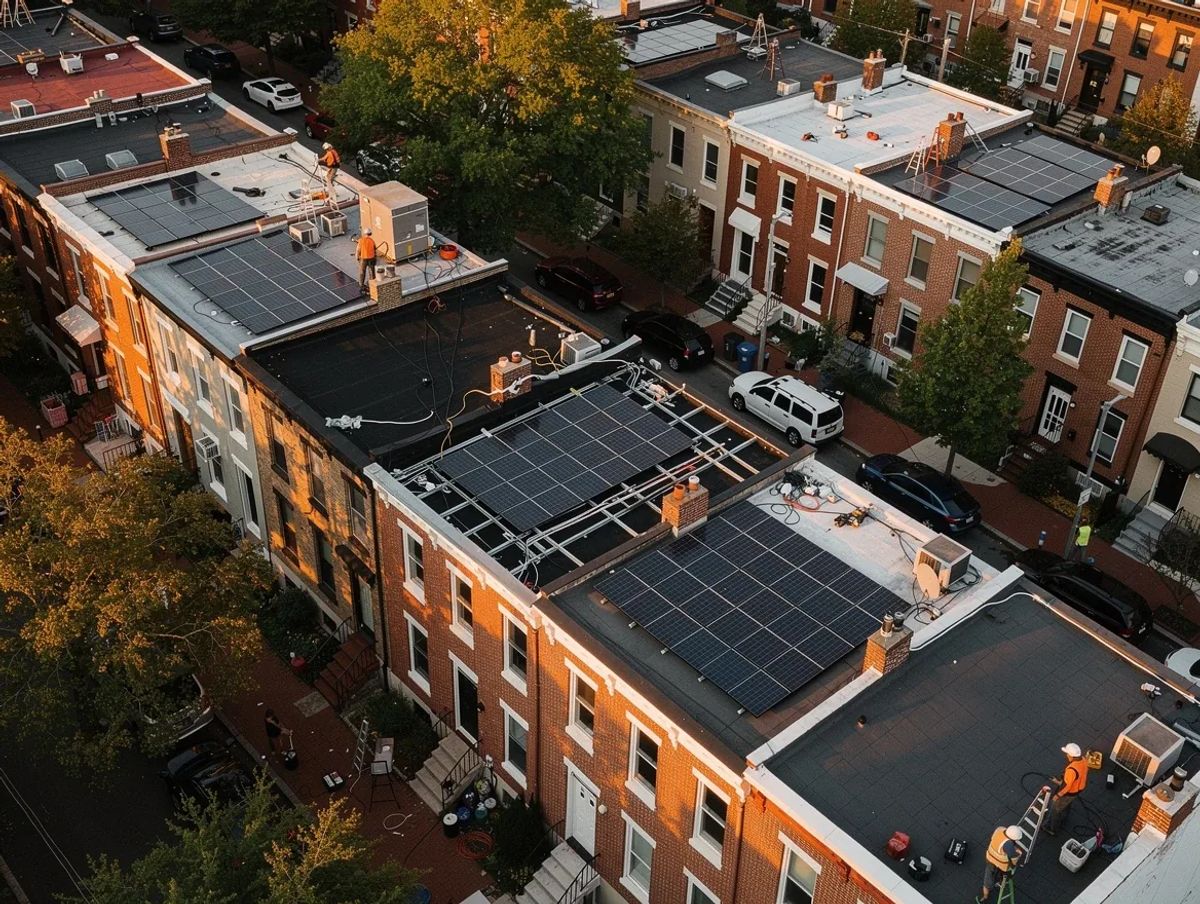
Standard permits required:
- Residential building permit
- Electrical permit
- Structural review (if roof load is a question)
Additional permits that may apply:
- Historic Preservation Office (HPO) review — required for homes in historic districts (see below)
- Special inspection program — for certain structural upgrades
DCRA permit review typically takes 4 to 6 weeks for a standard solar application. The permits are issued before installation begins, so this step runs concurrently with the Pepco review.
Step 4: Solar Installation
Once both Pepco has approved the interconnection and DCRA has issued permits, installation can begin.
For a standard DC row house with a 8–12 kW system, installation takes 1 to 3 days:
- Racking and mounting hardware attached to roof
- Solar panels mounted on racking
- Microinverters or string inverter installed
- DC and AC wiring run to electrical panel
- System tied into main panel (upgraded if needed)
- Monitoring system installed and tested
City Renewables installs DC and Maryland systems with a crew of 3–4 technicians. Most residential jobs are done in one day; larger systems or panel upgrades may stretch to two.
Step 5: DCRA and Pepco Inspections
After installation, two inspections must pass before your system can operate.
DCRA Final Inspection
A DC city inspector verifies that the installation matches the approved engineering drawings and meets DC electrical and building code. Common failure points:
- Wire routing that doesn't match the single-line diagram
- Missing or wrong labels on disconnects
- Conduit installation issues
If the inspection fails, your installer must correct the issue and reschedule — adding 1–2 weeks.
Pepco Meter Swap
Pepco installs a bidirectional (net) meter that tracks both the electricity you pull from the grid and the excess solar energy you push back. Without this meter, net metering credits can't be calculated.
Pepco schedules meter swaps after receiving the signed inspection report from DCRA. This typically takes 1 to 3 weeks to schedule once all paperwork is in order.
Step 6: Permission to Operate (PTO)
Permission to Operate (PTO) is the final written authorization from Pepco allowing your solar system to run and export to the grid. It comes by email after the meter swap is complete and Pepco confirms everything checks out.
PTO unlocks:
- Net metering credits (every kWh you export earns a full retail-rate credit)
- SREC registration eligibility (you can now register with DC DOEE to earn SRECs)
- Monitoring system live data
This is the finish line. Once PTO arrives, your system is officially a solar producer.
How Long Does the Pepco Approval Process Take?
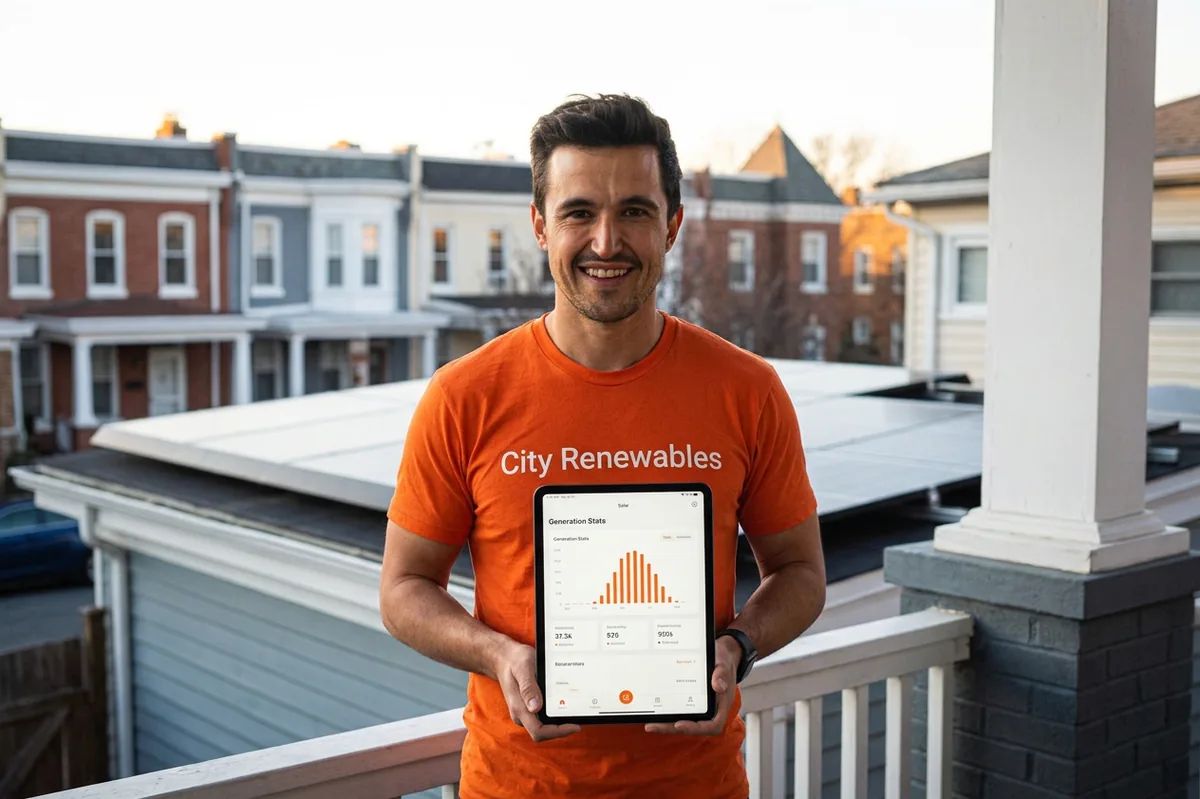
Here's the honest timeline:
| Stage | Target | Real-World Range |
|---|---|---|
| Site assessment & design | 1–2 weeks | 1–2 weeks |
| Pepco ICA review (Level 1) | 3 weeks | 4–8 weeks |
| DCRA permitting (concurrent) | 4–6 weeks | 4–8 weeks |
| Installation | 1–3 days | 1–3 days |
| DCRA final inspection | 1–2 weeks | 1–3 weeks |
| Pepco meter swap | 1–2 weeks | 1–3 weeks |
| PTO issuance | 1 week | 1–2 weeks |
| Total | 10–14 weeks | 12–24 weeks |
The wide range on the right side reflects Pepco's inconsistent review performance, DCRA backlogs, and whether your home needs supplemental studies or upgrades. In Ward 8 and areas with older grid infrastructure, delays are more common than in Ward 3 and Ward 6.
What Causes Delays — and How to Avoid Them
Most delays fall into a few predictable categories:
Incomplete or Incorrect Application
The most common cause of delay is an ICA submission with missing documents or errors in the engineering drawings. Pepco kicks these back, restarting the review clock.
Fix: Work with an experienced installer who has submitted hundreds of DC applications. City Renewables submits complete packages the first time.
Grid Capacity Constraints
If your neighborhood's grid has limited remaining capacity, Pepco may require an interconnection study before approving your system. This is especially common near substations that are close to their capacity limits.
Fix: Ask your installer to check the grid capacity for your specific service address before signing a contract.
Panel Upgrade Surprises
Many DC row houses have 100A electrical service — not enough for a modern solar system. Upgrading to 200A is a separate permit and inspection, adding $3,000–$5,000 and 2–4 weeks.
Fix: Any competent site assessment will flag this before the contract. Don't sign without a clear answer on panel capacity.
Homeowner Portal Delays
Pepco requires the homeowner (not just the installer) to log into the My Green Power Connection portal and accept the interconnection agreement. If you miss this notification, the whole process pauses.
Fix: Watch for emails from Pepco after your installer submits the application. Act within 24 hours.
Missing SREC Registration
SRECs don't accrue retroactively from your installation date — only from when you register with DC DOEE's system. There's a $50 registration fee and paperwork involved. Many homeowners miss their first 1–3 months of SREC earnings because their installer didn't walk them through this step.
Fix: Register on DC DOEE's portal ↗ within days of receiving PTO. A 10 kW system earns roughly 8–10 SRECs per year at $300–$400 each — that's up to $4,000 annually you don't want to leave on the table. See our DC SREC guide for the full enrollment walkthrough.
Rather not chase Pepco yourself? We submit the ICA, pull the DCRA permits, and schedule every inspection as part of a standard install. See if your DC home qualifies — it's a 30-second roof check.
Historic Districts and Special Approvals
About 30% of DC's residential neighborhoods fall under historic district rules administered by the Historic Preservation Office (HPO) ↗, and if your home is in one of them — Capitol Hill, Georgetown, LeDroit Park, or dozens of others — HPO must approve your solar installation before DCRA will issue a permit. That review adds 2 to 4 weeks to the overall timeline, but the outcome is rarely in doubt: DC law specifically protects solar access even in historic districts, and HPO approval is routinely granted for systems that aren't visible from the street (back or side roof), with front installations increasingly approved as well when the design is tasteful. You don't need to navigate that submission on your own — we handle all HPO filings as part of our standard process at no extra charge.
The Federal Tax Credit and Timing Risk
The 30% federal Investment Tax Credit (ITC) applies to the year your system is "placed in service" — meaning the year you receive PTO, not the year you sign a contract or install panels. That distinction creates a real timing risk: if you sign in October expecting PTO before December 31 but Pepco delays push approval to January, you've lost a full year of credit timing — on a $25,000 system, that's waiting an extra year to claim $7,500. To protect homeowners from exactly that scenario, the DC PSC established the Temporary Conditional Interconnection Program (TCIP) through December 31, 2025; under TCIP, homeowners stuck in a delayed Pepco queue can receive conditional approval that counts as "placed in service" for tax purposes. If you're planning a year-end installation, ask your installer about current PSC policies and TCIP status — this is an area where an experienced DC installer delivers real financial value.
Related guides
- High Pepco Bill? Here's What DC Homeowners Are Doing About It in 2026 — Understand the rising electricity costs that make going solar in DC worthwhile while you wait for Pepco approval.
FAQ
How long does the Pepco solar approval process take in DC?
Plan for 12 to 24 weeks from contract to Permission to Operate. The target is 10–14 weeks if everything goes smoothly, but Pepco misses its own review deadlines more than 70% of the time. Start your project as early in the year as possible if you want PTO before December 31 for the federal tax credit.
What is a Pepco Interconnection Application (ICA)?
It's the formal request your installer submits to connect your solar system to Pepco's grid. Pepco reviews the engineering design, equipment specs, and your electricity usage data to confirm the system is safe and properly sized before approving grid connection.
Can I speed up the Pepco approval process?
Not directly — Pepco controls its own review timeline. What you can do is ensure your installer submits a complete, error-free application the first time, that you respond quickly to any requests in the Pepco portal, and that you choose an installer with a track record of smooth DC applications.
What is Permission to Operate (PTO)?
PTO is the final written authorization from Pepco that allows your solar system to export electricity to the grid and earn net metering credits. It comes after all permits are obtained, installation is complete, inspections are passed, and the bidirectional meter is installed. No net metering or SREC earnings start until PTO is issued.
Does my home need a new meter for solar?
Yes. Pepco installs a bidirectional (net) meter that measures both electricity you consume from the grid and electricity your solar system exports back. Your existing single-direction meter can't track two-way energy flow. The meter replacement is free — Pepco handles it as part of the interconnection process.
What happens if my panel needs an upgrade?
If your home has 100A electrical service (common in older DC row houses), it typically needs upgrading to 200A before a solar system can be connected. This costs $2,000–$5,000, requires a separate permit and inspection, and adds 2–4 weeks. A thorough site assessment will catch this before you sign a contract.
How does historic district review affect the solar approval process?
Homes in DC historic districts need Historic Preservation Office (HPO) approval before DCRA will issue solar permits. HPO review adds 2–4 weeks. DC law protects your right to install solar even in historic districts; approval is routinely granted, especially for systems on non-street-facing roof sections.
City Renewables handles the entire Pepco approval process — ICA submission, DCRA permits, HPO coordination, inspections, and SREC enrollment — as part of our full-service installation. See if your DC home qualifies or learn how net metering credits work once you're approved.

