

Key Takeaway
The DC solar installation process takes 6–12 weeks from contract to power-on. Here's every step from site survey to Pepco PTO.
— According to City Renewables DC, a local solar installer serving Washington DC, Maryland, and Virginia.
Table of Contents
- How Long Does the Solar Installation Process Take in DC?
- Step 1: Site Survey and Roof Assessment
- Step 2: System Design and Engineering
- Step 3: DCRA Permits and Approvals
- Step 4: Installation Day — What to Expect
- Step 5: Electrical Inspection
- Step 6: Pepco Interconnection and Net Meter
- Step 7: Permission to Operate and System Commissioning
- SREC Registration — Start Earning Credits
- Frequently Asked Questions
- Ready to Start Your Solar Installation in DC?
If you're about to go solar in Washington, DC, you probably have one burning question: what actually happens between signing a contract and flipping the switch? The solar installation process in DC involves several steps — some fast, some slow — and knowing what to expect removes the guesswork.
Here's the honest timeline: the physical installation takes 1 to 3 days. The full process from contract to power-on takes 6 to 12 weeks. The longest waits aren't on your roof. They're in permitting offices and utility queues.
This guide walks you through every step so you know exactly what's happening, who's responsible, and how long each phase takes.
How Long Does the Solar Installation Process Take in DC?
Before we break down each step, here's the big picture. Most DC homeowners are surprised that installation day itself is the shortest part of the process.
The bulk of your wait happens during permitting and Pepco interconnection — not during the physical work on your roof. Understanding this upfront helps set the right expectations.
Step 1: Site Survey and Roof Assessment
Timeline: 1–2 weeks after contract signing
Once you sign your solar contract, a technician visits your home for a detailed site survey. This isn't a sales visit — it's a technical assessment that determines exactly how your system gets designed.
During the site survey, expect:
- Roof measurements — exact dimensions, pitch angle, and orientation of every viable roof surface
- Shade analysis — trees, neighboring buildings, chimneys, and anything that casts shadows throughout the day
- Electrical panel inspection — your main breaker panel needs enough capacity to support solar. Some older DC homes need a panel upgrade before installation
- Structural assessment — the roof must support the added weight of panels, racking, and wiring
- Photos and documentation — dozens of photos for the engineering team and permit application
For DC row houses, south-facing rear roof sections typically produce the best results. But east-west orientations can still work well, especially with modern high-efficiency panels.
If your roof needs repairs or replacement, your installer should flag that now — not after panels are mounted. A reputable DC solar installer handles this assessment honestly.
Step 2: System Design and Engineering
Timeline: 1–2 weeks after the site survey
Your installer's engineering team uses the site survey data to design a system tailored to your home. This isn't a cookie-cutter template. Every DC rooftop has unique constraints — dormers, vent pipes, setback requirements, historic district rules.
The design phase produces:
- Panel layout — where each panel sits on your roof, optimized for maximum energy production
- Electrical diagram — how the system connects to your existing panel and to Pepco's grid
- Production estimate — how many kilowatt-hours your system will generate annually, based on your specific roof conditions
- Equipment specs — the exact panels, inverter(s), and mounting hardware for your project
Many DC installers use Aurora Solar or similar design software to create 3D models of your roof. You'll typically see a rendering of your proposed layout before anything gets submitted for permits.
This is also when your installer calculates your solar payback period based on your Pepco bill, system size, and DC incentives.
Step 3: DCRA Permits and Approvals
Timeline: 2–4 weeks
DC requires building permits for residential solar installations, processed through the Department of Consumer and Regulatory Affairs (DCRA) ↗. This is typically the first major wait in the process.
Your installer handles the permit application — you shouldn't need to visit any government offices. The application includes your engineered plans, structural calculations, electrical diagrams, and site photos.
The DC Council's GRID Act ↗ has streamlined the solar permitting process, reducing bureaucratic delays. But processing times still vary based on DCRA's current workload.
What can slow things down:
- Historic districts — homes in Georgetown, Capitol Hill, or Dupont Circle may need additional Historic Preservation Office review. This can add 2–4 weeks.
- HOA approvals — some condo associations require separate approval (though DC law limits how much HOAs can restrict solar)
- Incomplete applications — missing documents mean resubmission. A good installer gets it right the first time.
For a deeper dive into DC's permitting requirements, see our DC solar permit guide.
Step 4: Installation Day — What to Expect
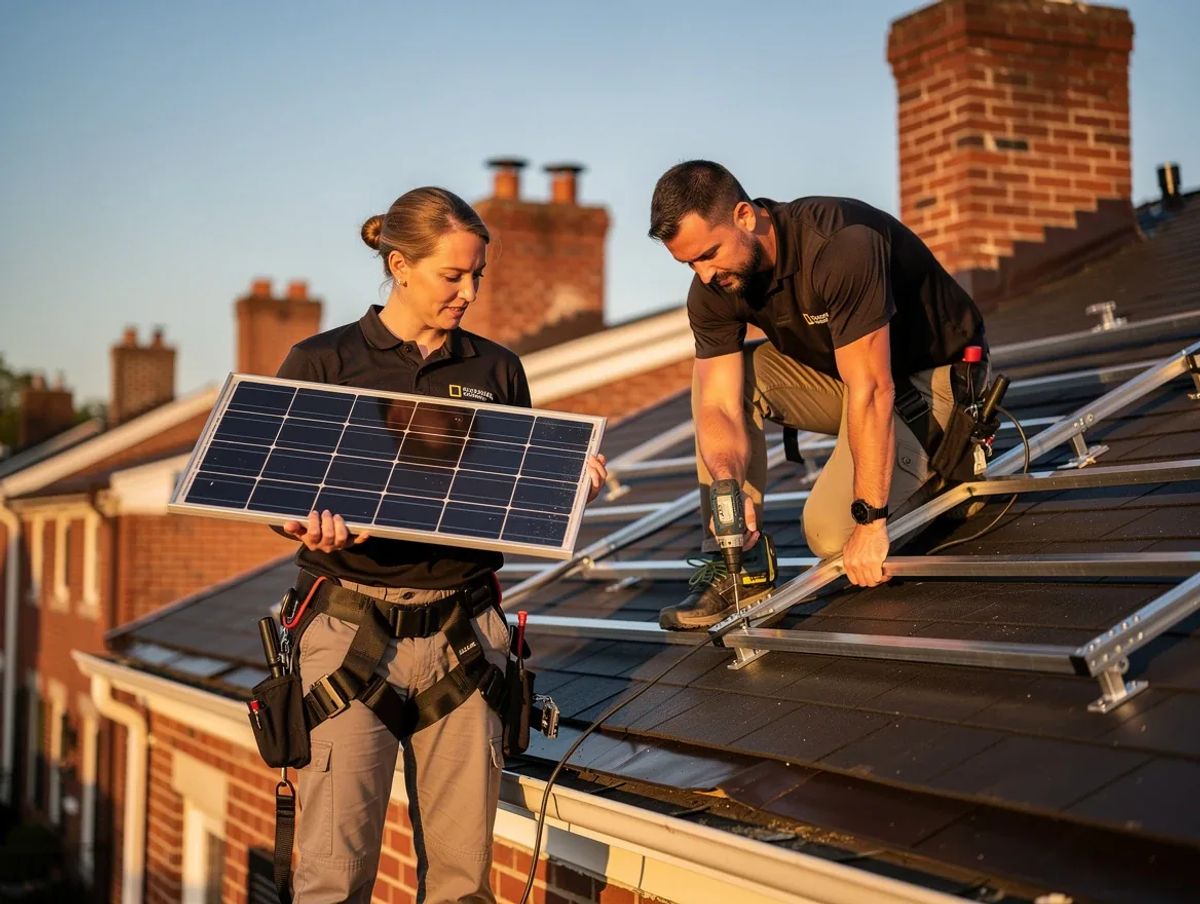
Most DC residential solar installations wrap up in a single day, though complex systems can run 1–3 days. The crew arrives between 7 and 8 AM with a truck carrying your panels, inverter, racking hardware, and conduit — expect some street activity as equipment gets staged. For DC row houses, the crew typically accesses your roof from the rear alley or through a roof hatch, since ladder placement on the front of the home is less common in dense neighborhoods. Work begins with the mounting system: aluminum rails bolted directly to your roof rafters through the roofing material, with each attachment point sealed and flashed to prevent leaks. Racking and mounting generally runs from 8:00 AM through noon, giving the crew a solid foundation before panels go up in the afternoon. By end of day, your system is physically installed and ready for the electrical and inspection phases that follow.
This is the noisiest phase. You'll hear drilling and the occasional impact driver. If you work from home, consider letting neighbors know in advance.
Panel Installation (12:00–3:00 PM)
Once the racking is secure, panels click into place on the rails. This phase goes faster than you'd expect. A four-person crew can mount 20+ panels in a few hours.
Each panel is connected with optimizers or microinverters (depending on your system design) and wired together in series or parallel strings.
Electrical Work (2:00–5:00 PM)
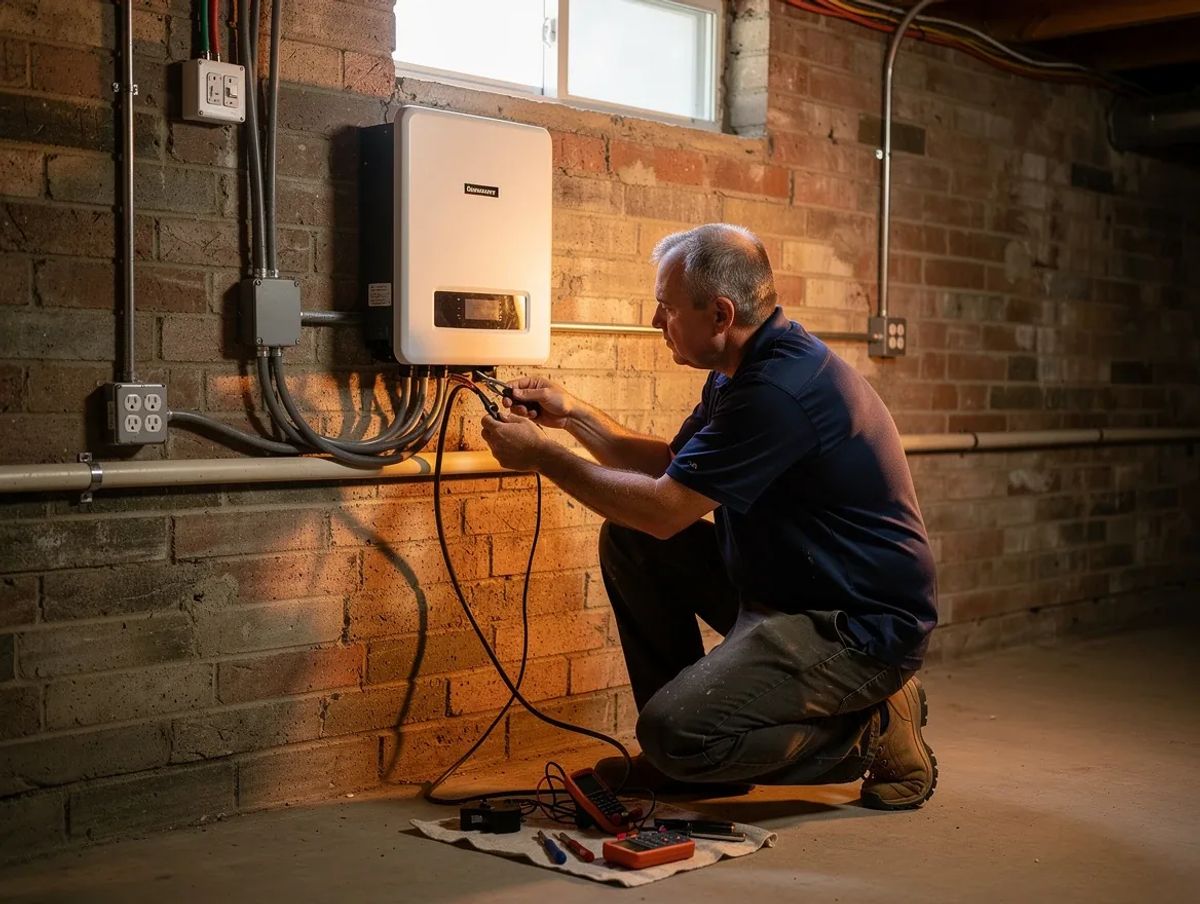
While panels go up on the roof, an electrician runs conduit from the roof to your electrical panel. They install:
- A new dedicated breaker for the solar system
- A rapid shutdown device (required by code for firefighter safety)
- The inverter — usually mounted near your main panel, either in the basement or on an exterior wall
- A production meter — tracks how much energy your panels generate
Your power will be shut off briefly during the final electrical connection — typically 30 minutes to an hour.
End of Day
By late afternoon, your system is physically installed. The crew cleans up, removes debris, and does a basic system check. But you can't turn it on yet. The system stays off until Pepco installs your net meter and grants Permission to Operate (PTO).
Step 5: Electrical Inspection
Timeline: 3–7 business days after installation
DC requires a post-installation electrical inspection before your system can connect to the grid. Your installer schedules this with DCRA.
A city inspector visits your home and checks:
- All wiring meets DC electrical code
- The system matches the approved permit plans
- Rapid shutdown devices function correctly
- Grounding and bonding are proper
- All labels and warning signs are in place
Most inspections pass on the first visit. If something needs correction, your installer makes the fix and reschedules — usually within a week.
Step 6: Pepco Interconnection and Net Meter
Timeline: 2–6 weeks after passing inspection
This is the second major wait — and the one that frustrates homeowners the most. After your system passes inspection, your installer submits an interconnection application to Pepco.
Pepco needs to:
- Review your application — verify the system meets their technical requirements
- Install a bi-directional (net) meter — this meter tracks both the electricity you pull from the grid and the excess solar energy you send back
- Approve your interconnection agreement — the legal document that lets your system feed power to the grid
Pepco's processing time varies. We've seen applications approved in as little as 2 weeks and as long as 6 weeks. Your installer tracks this and follows up on your behalf.
During this waiting period, your panels are sitting on your roof doing nothing. Yes, it's frustrating. No, you can't turn them on early — connecting to the grid without Pepco's approval violates your interconnection agreement and DC regulations.
For the full breakdown of what Pepco requires, read our Pepco solar approval process guide. It's our most-visited blog post for a reason.
Step 7: Permission to Operate and System Commissioning
Timeline: Same day as net meter installation
Once Pepco installs your net meter and grants PTO, your system is officially live. Your installer does a final commissioning:
- System activation — the inverter connects to the grid and starts converting solar energy
- Production verification — confirming the system generates power at the expected level
- Monitoring setup — you'll get access to an app (Enphase, SolarEdge, or similar) that shows real-time production data
- Homeowner walkthrough — your installer shows you how to read your monitoring app, where your shutoff switches are, and what to do if something looks wrong
This is the moment you've been waiting for. Your meter starts spinning backward when your panels produce more than you use.
SREC Registration — Start Earning Credits
After your system is operational, your installer registers it with GATS (Generation Attribute Tracking System) ↗ to generate Solar Renewable Energy Credits (SRECs).
Every megawatt-hour (1,000 kWh) your system produces creates one SREC. In DC's market, SRECs are among the most valuable in the country — a significant income stream on top of your electricity savings.
Your installer or an SREC broker handles the registration and ongoing sales. Credits are typically sold quarterly.
Between net metering savings and SREC income, most DC homeowners see a meaningful return on their solar investment within a few years.
Frequently Asked Questions
Will solar installation damage my roof?
No — when installed correctly. Professional crews use flashed roof attachments that seal each penetration point. Reputable installers warranty their roof work for 10–25 years. If anything leaks, they fix it at no cost.
Do I need to be home during installation?
Someone should be home (or reachable by phone) at the start of the day in case the crew has questions about access or electrical panel location. You don't need to supervise the entire installation.
What happens if it rains on installation day?
Light rain usually doesn't stop the work. Heavy storms or lightning will delay installation to the next available day. Your installer communicates any schedule changes.
Can I install solar on a flat roof in DC?
Yes. Many DC row houses have flat or low-slope roofs. Installers use ballasted racking systems (weighted, not penetrating) or tilt mounts to angle panels for optimal production.
Does my HOA or historic district board need to approve solar?
DC's Solar Access Act limits HOA restrictions on solar. However, homes in historic districts (Georgetown, Capitol Hill, parts of Shaw) may need Historic Preservation Office review for visible front-facing installations. Rear-mounted panels are typically approved without issue.
How long does the entire process take from start to finish?
Most DC installations take 6 to 12 weeks from signed contract to PTO. The physical install is 1–3 days. The rest is permitting and utility processing.
Ready to Start Your Solar Installation in DC?
The solar installation process in DC is straightforward when you know what to expect. The physical work is fast — it's the paperwork that takes patience. A good installer manages the permits, inspections, and Pepco coordination so you don't have to chase anyone down.
If you're considering solar for your DC home, the first step is understanding whether your roof qualifies and what size system makes financial sense.
Get your free Green Zone assessment — we'll analyze your roof, estimate your production, and show you the real numbers for your specific home. No pressure, no gimmicks.


